Cusco was once the navel of the Inca world — the most powerful empire the Americas had ever seen. Today, at 3,400 metres above sea level, this extraordinary city layers Inca stonework beneath Spanish colonial churches, and ancient ritual beneath modern daily life.
Most travellers arrive in Cusco as a gateway to Machu Picchu, but the city and its surrounding Sacred Valley deserve at least three to four days of dedicated exploration. This guide covers the essential sights, practical tips for altitude, the best areas to stay, transport options, and a suggested itinerary.
🎁 FREE — INSTANT DOWNLOAD
Peru Safety & Scam Guide
Common scams, taxi safety, altitude advice, and what to avoid at every major destination. Free PDF — no email required.
Download Free PDF →🏛️ Plaza de Armas – The Heart of Cusco
Plaza de Armas
Historic Centre · UNESCO World Heritage
The Plaza de Armas sits on the foundations of the original Inca Huacaypata — the great public square of the empire. Today it is framed by the magnificent Cusco Cathedral (begun in 1559, built on the ruins of the palace of Inca Viracocha) and the ornate Iglesia de la Compañía de Jesús. Sip a coca tea at one of the surrounding cafés, watch Andean women in traditional dress walk their llamas across the square, and feel the extraordinary overlap of civilisations that defines this city.
Tip: The Cathedral is closed on Sunday mornings for mass — time your visit accordingly. Entry requires a Boleto Turístico (tourist ticket).
🌟 Qorikancha – Temple of the Sun
Qorikancha (Coricancha)
Inca Temple · Sacred Site
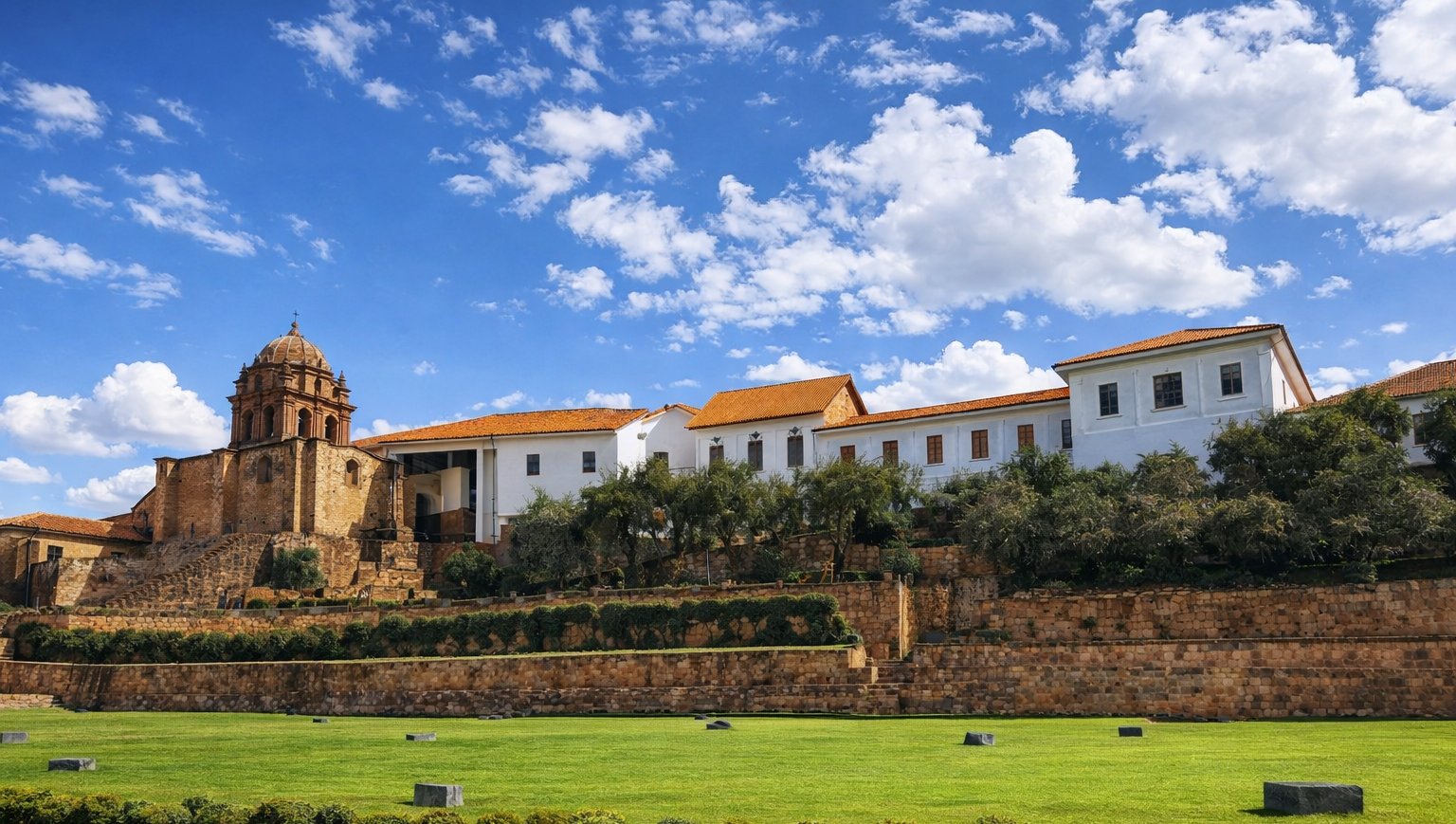
The Qorikancha was the most sacred temple in the Inca Empire, dedicated to Inti, the sun god. Its walls were once lined with gold panels, and its gardens featured golden replicas of plants and animals. The Spanish built the Convent of Santo Domingo directly on top of its foundations — you can see the contrast between the impossibly precise Inca stonework and the colonial structure above. The earthquake of 1950 badly damaged the church but left the Inca walls perfectly intact. A humbling testament to Inca engineering.
Tip: Entry to Qorikancha is separate from the Boleto Turístico — budget around 15 soles. Early morning visits are less crowded.
🗿 Sacsayhuamán – The Fortress Above the City
Sacsayhuamán
Inca Fortress · Panoramic Views · 3,701m
Perched on a hill overlooking Cusco, Sacsayhuamán is one of the most awe-inspiring Inca monuments on earth. Its three massive zigzag terraces are built from limestone blocks weighing up to 120 tonnes — fitted together without mortar with a precision that still baffles engineers today. The views over Cusco's terracotta rooftops from here are extraordinary. The site also hosts the annual Inti Raymi festival every June 24th — one of South America's most spectacular ceremonies.
Tip: Walk up from the Plaza de Armas (about 30 minutes uphill) to acclimatise gradually. Alternatively, take a taxi and walk down. Included in the Boleto Turístico.
🌿 San Blas – Cusco's Artisan Quarter
San Blas
Bohemian Quarter · Workshops · Narrow Streets
The uphill neighbourhood of San Blas is Cusco's creative soul — a maze of narrow cobbled streets lined with artisan workshops, textile studios, and independent cafés. Visit the Chapel of San Blas, which houses one of the most intricate carved wooden pulpits in the Americas. Browse the daily market for handwoven textiles, ceramics, and silver jewellery produced by local craftspeople, many of whom work in full view of customers.
Tip: San Blas is uphill from the Plaza de Armas — take it slowly if you haven't fully acclimatised yet. The neighbourhood is best explored on foot.
🗺️ Suggested Itinerary – 3 Days in Cusco
Day 1 – Rest and Acclimatise: Arrive, check into your hotel, and take it easy. Walk gently around the Plaza de Armas and visit Qorikancha in the afternoon. Coca tea is your best friend. Light dinner nearby. No strenuous activity.
Day 2 – City Highlights: Morning city tour — Cathedral, Sacsayhuamán, Qenqo, Puca Pucara, and Tambomachay (the four ruins above Cusco). Afternoon: explore San Blas on foot. Evening: pisco sour and dinner in the Plaza.
Day 3 – Sacred Valley or Machu Picchu: Take the train to Machu Picchu (book in advance) for a full day, or spend the day exploring the Sacred Valley — Pisac market, Ollantaytambo fortress, and local villages.
🏔️ Altitude – Essential Advice
Cusco sits at 3,400 metres (11,155 feet) above sea level. Altitude sickness (soroche) is real and affects many visitors. Plan to spend your first 24–48 hours resting, avoid alcohol, and drink plenty of water and coca tea. Symptoms — headache, nausea, fatigue — typically ease after the first day. If symptoms are severe, descend immediately. Medication (acetazolamide/Diamox) can be prescribed by your doctor before travel and is also available in Cusco pharmacies.
🚖 Getting Around Cusco
The historic centre is walkable, but remember — everything uphill feels harder at altitude. Taxis are very affordable and widely available; always agree on a price before getting in. For sites in the Sacred Valley, organised tours are the most practical option. The train to Machu Picchu departs from nearby Ollantaytambo (1.5 hours by road from Cusco) — book Peru Rail or Inca Rail tickets well in advance, especially in high season.
🛡️ Safety in Cusco
Cusco is generally safe for tourists. The historic centre, San Blas, and Miraflores areas are the most tourist-friendly. Keep your belongings secure in crowded markets and on public transport. Use app-based taxis at night. Avoid walking alone after dark on unlit streets outside the centre. Pickpocketing can occur in crowded tourist sites — use a money belt and carry only what you need for the day.
💡 Practical Tips
Boleto Turístico: The main tourist ticket covers Sacsayhuamán, Qenqo, Puca Pucara, Tambomachay, and many Sacred Valley sites. Buy it at the DIRCETUR office near the Plaza de Armas.
Best time to visit: May to October is the dry season — clear skies, cold nights. June to August is peak season. November to April brings rain but fewer crowds and green landscapes.
Currency: Soles (PEN). Carry cash for markets and smaller sites — card acceptance is inconsistent outside hotels and restaurants.
Language: Spanish and Quechua (the indigenous Inca language) are both spoken. Learning a few Quechua words — "Allillanchu" (hello), "Sulpayki" (thank you) — will delight locals.
📖 COOKBOOK · DIGITAL EDITION
Authentic Peruvian Cuisine
Recipes, techniques, and flavours straight from Peru's kitchens — yours as an instant PDF download.
Download the Cookbook — $12 →Physical SIM vs eSIM: Buying a physical SIM in Peru often means long queues at the airport or shopping centres, and you will need to show your passport for registration. To skip the wait and arrive already connected, activating an Airalo eSIM before your flight is the smarter alternative. Use code PERULOCAL for an exclusive 15% discount — and step off the plane with data already running.
✈️ Travel Tip: Save on Roaming Costs in Peru
Travelers can avoid expensive roaming fees by using Airalo eSIMs, the world's first eSIM store with fast, reliable data plans for Peru and 200+ destinations.
Exclusive Offer: Save 15% on your first eSIM with the code PERULOCAL.
Set up your Airalo eSIM before flying and stay connected the moment you land. Buy Your eSIM
Ready to travel smarter? Get Your eSIM Now
Offer valid until December 31, 2026.