The Nazca Lines are one of archaeology's greatest unsolved mysteries — hundreds of enormous geoglyphs etched into the surface of the Peruvian desert, invisible from the ground, spectacular from the air, and completely silent on why they were created.
Located in the arid Nazca plateau of southern Peru, roughly 450 kilometres south of Lima, the Lines were created by the Nazca culture between 500 BCE and 500 CE. They were inscribed on the UNESCO World Heritage List in 1994. Despite decades of research, scholars still disagree on their purpose — theories range from astronomical calendars to ceremonial pathways, from offerings to the gods to irrigation maps. What is not in dispute is their scale, their precision, and the extraordinary experience of seeing them from a small aircraft banking low over the ochre desert floor.
🌵 What to See
The Geoglyphs from the Air
Overflight · 30–60 minutes · Nazca Airport
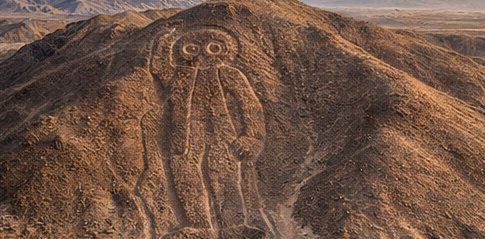
The only meaningful way to see the Nazca Lines is from above. The figures — a hummingbird, a condor, a spider, a monkey, an astronaut, and dozens of geometric lines and trapezoids — can only be perceived as a whole from altitude. On the ground, they appear as nothing more than shallow trenches of paler rock. From a light aircraft at 300–600 metres, the scale and precision of the lines becomes breathtaking. Overflights depart from Nazca's María Reiche Neuman Airport and typically last between 30 and 60 minutes depending on the route selected.
Tip: Book morning flights. Desert thermals build through the afternoon, making flights rougher. Morning light also gives the best photographic contrast.
The Mirador and Viewing Platform
Ground Viewpoint · Free Access · On the Panamericana Sur
For travellers who cannot take a flight, or as a complement to one, there is a metal observation tower beside the Panamericana Sur highway, roughly 20 kilometres north of Nazca city. From the top you can observe three geoglyphs: the Hands, the Lizard, and the Tree. It is a modest view — enough to understand the desert setting and the shallow nature of the lines — but it does not substitute for the overflight. Admission is free; the tower is always open.
Tip: Combine the tower with a visit to the María Reiche Museum, located in the house where the German mathematician lived for decades while studying the Lines.
The María Reiche Museum
Archaeological Museum · Nazca Research History
The María Reiche Museum sits inside the house where the German researcher lived from the 1940s until her death in 1998, having dedicated her life to measuring, mapping, and protecting the Nazca Lines. The museum displays her original instruments, field notebooks, maps, and scale models of the major geoglyphs. For anyone interested in the science behind the Lines — rather than just the spectacle — this is an essential stop. Entry costs a few soles and takes about an hour.
Tip: The museum is on the Panamericana Sur, close to the observation tower. Visit both in the same half-day before or after your flight.
Cahuachi Ceremonial Centre
Nazca Archaeological Site · Adobe Pyramids
Cahuachi is the largest known Nazca ceremonial site — a complex of adobe pyramids, plazas, and burial grounds spread across 24 square kilometres in the desert, approximately 30 kilometres west of Nazca city. Active between 100 BCE and 500 CE, it appears to have been a pilgrimage destination rather than a permanent settlement. Excavations are ongoing, and only a fraction of the site has been uncovered. A guided visit takes two to three hours and pairs well with a morning overflight.
Tip: Access to Cahuachi requires a guide and transport from Nazca — most local tour agencies offer combined packages with the overflight.
🗺️ Suggested Itinerary
Day 1: Arrive in Nazca from Lima (bus, approximately 7–8 hours) or from Ica (1.5 hours). Check in, rest, and visit the María Reiche Museum and observation tower in the late afternoon. Dinner in Nazca city.
Day 2: Early morning overflight from Nazca airport (book in advance). After landing, visit Cahuachi ceremonial centre with a local guide. Afternoon departure by bus toward Ica, Arequipa, or Lima.
Alternatively, the Nazca Lines can be visited as a day trip from Ica — combined transfer and overflight packages departing from Ica airport take approximately 6–7 hours in total.
🛡️ Safety Tips
Nazca is generally safe for tourists. The main considerations are practical rather than security-related. Motion sickness during overflights is the most common issue — light aircraft bank steeply to give passengers window views of each figure. Take motion sickness medication the night before if you are prone, avoid heavy meals, and request a front seat if possible (less turbulence). Desert heat is significant from November to March — always carry water and sun protection. In Nazca city, take standard urban precautions: use reputable taxis, avoid displaying expensive equipment, and keep copies of your documents separate from the originals. The Panamericana Sur bus route is well-established and safe with major operators (Cruz del Sur, Oltursa).
🚌 Getting There & Around
Nazca is located on the Panamericana Sur highway. From Lima, direct buses depart from the Terminal Terrestre in Miraflores and take 7–8 hours; overnight buses are a practical option. From Ica, the journey is 1.5–2 hours by bus or collectivo. From Arequipa, approximately 9 hours north. There is no commercial airport at Nazca for scheduled airline flights — the local airport handles overflight aircraft only. Within the region, taxis and mototaxis are the main transport options; always negotiate the price before departure. Most overflight operators offer airport transfers from hotels as part of their package.
🏡 Best Areas to Stay
Nazca city is the obvious base — accommodation ranges from budget hostels along Bolognesi and Lima streets to mid-range hotels. The city is compact and easy to navigate on foot. For those arriving from Ica or Lima by day, it is entirely feasible to stay in Ica or Huacachina (the oasis town near Ica) and visit the Nazca Lines on a day excursion. Ica offers a wider range of accommodation and the added attraction of the Huacachina sand dunes. There are no luxury hotels in Nazca itself; the closest option is Casa Andina in Nazca, a reliable mid-range chain property.
💡 Practical Advice
Best time to visit: The Nazca plateau is one of the driest places on earth — rainfall averages less than 5 mm per year. This means the Lines can be visited year-round. The best flying conditions are from May to November: drier, calmer air and good visibility. December to March can bring stronger afternoon thermals, though mornings remain flyable. Avoid national holidays (July 28–29, Christmas week) when flights book out well in advance.
Altitude: Nazca sits at approximately 590 metres above sea level — no acclimatisation required. After Cusco or Lake Titicaca, it will feel positively easy to breathe.
Currency: Carry soles in cash. Card acceptance is limited in Nazca. Most overflight companies accept card payment for bookings, but smaller restaurants and taxis require cash.
Connectivity: Mobile data coverage is available in Nazca city with Claro and Movistar. Consider an Airalo eSIM for seamless Peru-wide connectivity without roaming charges.
✈️ Recommended Nazca Flights
The following overflight options are verified and bookable directly. All depart from Nazca or Ica and cover the main geoglyphs.
Nazca Lines Overflight Tour from Nazca
30–60 minutes · From USD 185
A comprehensive overflight covering the main figures and geometric lines from Nazca airport, with flexible duration options to suit your schedule.
Check Price →Fly over the Enigmatic Nazca Lines
30 minutes · From USD 170
A focused 30-minute overflight of the most celebrated Nazca figures — ideal for those with limited time or who prefer a shorter flight.
Check Price →Fly Over the Nazca Lines with the Experts
2–3 hours · From USD 170
A full-day experience departing from Lima, including transport, the overflight, and guided context around the Nazca plateau and its history.
Check Price →Flight to the Nazca Lines with Transfer from Ica
6–7 hours · From USD 190
A comprehensive day tour departing from Ica, including transport to Nazca airport and the overflight — ideal for travellers based in Ica or Huacachina.
Check Price →Flight over the Nazca Lines from Nazca (35 min)
35 minutes · From USD 140
The most accessible overflight option — a classic 35-minute flight from Nazca covering the essential figures at a competitive price point.
Check Price →📱 STAY CONNECTED
Peru eSIM — Airalo
Data coverage across Peru from day one. No roaming fees, instant activation.
Exclusive Offer: Save 15% with code PERULOCAL
Get Your eSIM →📖 COOKBOOK · DIGITAL EDITION
Authentic Peruvian Cuisine
45 authentic recipes from Peru's Pacific coast kitchens — instant PDF download.
Download the Cookbook — $12 →📄 DOWNLOADABLE GUIDES
Peru Travel Guides
PDF guides crafted from real local experience — packing lists, transport, itineraries.
🏨 LOCAL SERVICE
Hotel Check Peru
Not sure about your hotel's location in Nazca or Ica? Get a safety and logistics report on any Peru hotel — within 24 hours.
Order Check · USD 25🎁 FREE — INSTANT DOWNLOAD
Peru Safety & Scam Guide
Common scams, taxi safety, altitude advice, and what to avoid at every major destination. Free PDF.
Physical SIM vs eSIM: Buying a physical SIM in Peru often means long queues at the airport or shopping centres, and you will need to show your passport for registration. To skip the wait and arrive already connected, activating an Airalo eSIM before your flight is the smarter alternative. Use code PERULOCAL for an exclusive 15% discount — and step off the plane with data already running.
✈️ Travel Tip: Save on Roaming Costs in Peru
Travelers can avoid expensive roaming fees by using Airalo eSIMs, the world's first eSIM store with fast, reliable data plans for Peru and 200+ destinations.
Exclusive Offer: Save 15% on your first eSIM with the code PERULOCAL.
Set up your Airalo eSIM before flying and stay connected the moment you land. Buy Your eSIM
Ready to travel smarter? Get Your eSIM Now
Offer valid until December 31, 2026.