Peru's South Route is one of the most rewarding drives on the continent — a coastal desert road connecting the Pacific marine wildlife of Paracas, the iconic sand dunes of Ica, and the ancient mystery of the Nazca Lines. This 3–4 day extension makes an ideal pre-route before continuing south to Arequipa or east to Cusco. Here is everything you need to know to do it well.
🗓️ Suggested Itinerary at a Glance
Lima → Paracas: Night 1 · Paracas → Ica: Night 2 (or Night 2–3) · Ica → Nazca: Final night
Total: 3–4 days — perfect before continuing to Arequipa or Cusco
3–4 hours by road from Lima
Lima → Pisco / Paracas
Ballestas Islands
The half-day boat tour to the Ballestas Islands is non-negotiable. Sea lions bask on rocky outcrops in their thousands. Humboldt penguins — a species that surprises most visitors given the tropical latitude — nest in crevices. Boobies, pelicans, and cormorants cloud the air in enormous colonies. On the way out, the boat passes the Candelabro, a 180-metre geoglyph etched into a clifftop overlooking the Pacific — origin unknown, date debated.
Paracas National Reserve
The Reserve covers 335,000 hectares of Andean desert meeting the Pacific. The landscapes are otherworldly — iron-red beaches, white sand bluffs, and ochre cliffs that glow at sunset. The 75-kilometre circuit by 4x4 or with a guide takes half a day and rewards with empty panoramas that don't appear in most travel photographs.
Pisco Sour Experience
Paracas is the ideal place for your first authentic Pisco Sour with an ocean view. The coastal restaurants here serve it properly — with Peruvian pisco, fresh lime, egg white, and bitters — alongside plates of ceviche and tiradito.
Tambo Colorado (Optional)
One of the best-preserved Inca administrative complexes on the entire Peruvian coast. The ochre and red-painted walls are still vivid after 500 years. If archaeology is part of your motivation for visiting Peru, this 30-minute detour is strongly worth it.
1 hour from Paracas
Paracas → Ica / Huacachina
Huacachina Oasis
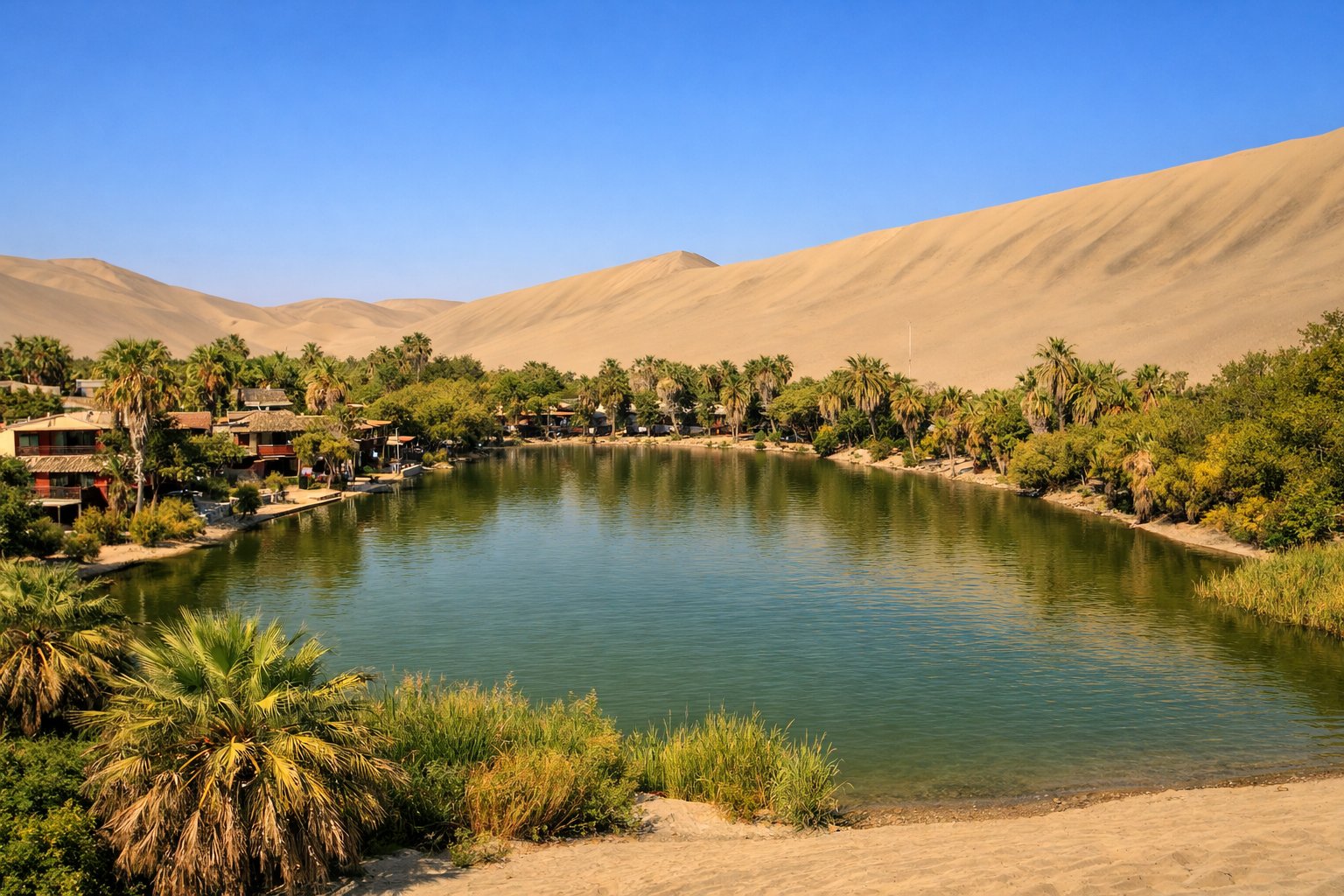
A natural oasis — a small turquoise lagoon surrounded by date palms — sitting at the base of sand dunes that reach 100 metres in height. The image is genuinely surreal: a desert lagoon encircled by towering dunes, visible from the road before you even arrive. Activities here are physical and exhilarating: sandboarding on the dune faces and dune buggy circuits across the ridge lines at sunset are among the best adventure experiences in southern Peru.
Wine & Pisco Wineries
The Ica Valley is Peru's main wine and pisco-producing region. The bodegas here offer guided tours of the fermentation process (traditional foot-crushing is still practiced at some), tastings of Quebranta, Italia, and Torontel pisco varieties, and direct purchase at cellar prices. Tacama and Vista Alegre are the most accessible for visitors.
2.5 hours from Ica
Ica → Nazca
The Nazca Culture: Context Before You Fly
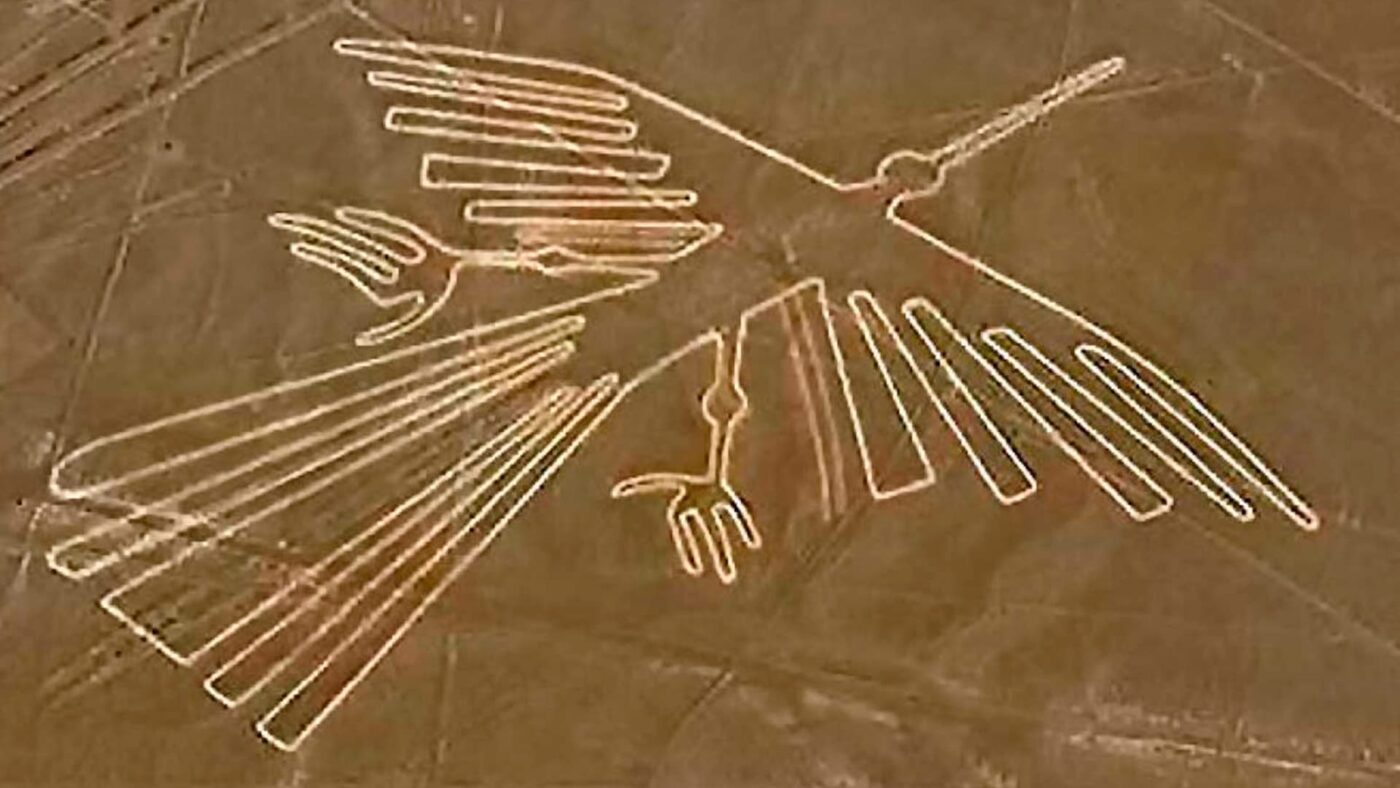
The Nazca people (200 BC – 600 AD) were an advanced desert civilization known for polychrome ceramics, sophisticated underground irrigation systems called puquios, and — most famously — enormous geoglyphs drawn across 500 square kilometres of pampa. The lines and figures are formed by removing the darker surface stones to reveal the lighter desert floor beneath, and they have remained intact for two millennia in one of the world's driest climates.
Why were they made? The theories range from astronomical calendars to ritual offering paths to alien construction. The most widely accepted academic view, developed by German researcher María Reiche over 50 years of study, is that they served ceremonial and astronomical functions for the Nazca culture. No theory has been definitively proved — and that ambiguity is part of what makes them genuinely compelling.
Nazca Lines Overflight
The only meaningful way to see the major geoglyphs is from a small aircraft. The figures are too large to comprehend from ground level — the Hummingbird alone spans 93 metres, the Monkey 90 metres, and the Spider 47 metres.
✈️ What to Expect on Your Nazca Flight
- Duration: 30–35 minutes in the air
- Aircraft: Small Cessnas with 4–12 passengers and panoramic windows
- The pilot banks gently on both sides so all passengers see each figure
- Between 12 and 15 major geoglyphs visible per flight (Hummingbird, Monkey, Spider, Astronaut, Condor, Whale, Dog, and others)
- Best time: Early morning (most stable air conditions; afternoon winds can cause turbulence)
- Practical advice: Light breakfast only. Bring motion-sickness pills if you're susceptible. Request the front seat if you're sensitive to movement.
María Reiche Museum
The house where the German mathematician and archaeologist spent 50 years mapping and protecting the Nazca Lines has been preserved as a museum. Her measurements, drawings, and theoretical models are exhibited here. For travelers who want to understand the lines intellectually rather than just visually, it's an excellent complement to the overflight.
Miradores (Viewing Platforms)
If the overflight budget doesn't work, two roadside mirador towers allow you to see the Hands (Las Manos) and the Lizard (El Lagarto) from the ground. It's a limited experience compared to the flight, but the engineering of the lines — perfectly straight across undulating terrain — is still visible and impressive from the platform.
Natural continuation of the route
Onward: Arequipa or Cusco
From Nazca, the route connects naturally to two of Peru's great destinations. Arequipa is 8–9 hours south by road — a colonial city beneath three volcanoes, gateway to the Colca Canyon. Cusco is reachable via Abancay in 14–16 hours — a long day, but achievable as an overnight bus. Most travelers take the Arequipa connection first, then travel to Cusco from there.
🗺️ CUSTOM ITINERARY SERVICE
Plan Your South Route with a Local Expert
I can help you sequence this route, recommend hotels at each stop, arrange the Nazca overflight, and connect it seamlessly into your wider Peru itinerary.
Start Planning My South Route →🎁 FREE
Peru Safety & Scam-Avoidance Guide
The one thing every first-timer needs to read before landing in Lima. Instant download.
📖 COOKBOOK · DIGITAL EDITION
Authentic Peruvian Cuisine
Recipes, techniques, and flavours straight from Lima's kitchens — yours as an instant PDF download.
Download the Cookbook — $12 →Physical SIM vs eSIM: Buying a physical SIM in Peru often means long queues at the airport or shopping centres, and you will need to show your passport for registration. To skip the wait and arrive already connected, activating an Airalo eSIM before your flight is the smarter alternative. Use code PERULOCAL for an exclusive 15% discount — and step off the plane with data already running.
✈️ Travel Tip: Save on Roaming Costs in Peru
Travelers can avoid expensive roaming fees by using Airalo eSIMs, the world's first eSIM store with fast, reliable data plans for Peru and 200+ destinations.
Exclusive Offer: Save 15% on your first eSIM with the code PERULOCAL.
Set up your Airalo eSIM before flying and stay connected the moment you land. Buy Your eSIM
Ready to travel smarter? Get Your eSIM Now
Offer valid until December 31, 2026.