
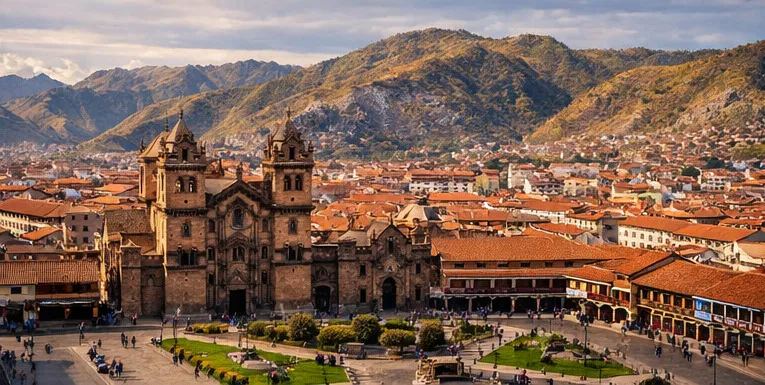
For most visitors, Cusco is a launchpad: a few days of acclimatizing, a city tour, then the train to Machu Picchu. The region around it is much larger than that. Within reach are Wari cities older than the Incas, colonial churches painted from floor to ceiling, quarries where Inca stone was cut, and mountain landscapes with more llamas than people.
This guide groups 20 real, visitable places by area so you can combine them sensibly. Figures come from published sources and can change, so confirm access, ticketing and road conditions locally before you go.
In This Guide
🎒 Before You Go
Altitude. Cusco sits at about 3,400 m (11,200 ft), and several places below are much higher. Give yourself a few days in the city first.
Tickets. The Boleto Turístico del Cusco covers Sacsayhuamán, Q'enqo, Puka Pukara and Tambomachay (Circuit 1); Tipón, Pikillacta and several city museums (Circuit 2); and Pisac, Ollantaytambo, Chinchero and Moray (Circuit 3). Buy the full ticket or one circuit. Places outside those circuits are ticketed separately, if at all.
Season. The dry season runs roughly May to October. Rain outside those months can affect trails and roads.
Getting around. The South Valley sites sit on the main highway toward Urcos and Puno, so they can be done with local buses or a taxi. The highland and trek destinations are usually reached with a licensed operator or guide. Carry some cash in soles, since smaller sites often collect entry fees on the spot.
🏞️ Just Outside Cusco
These four sites are the easiest to reach and can fit into half-day outings. Q'enqo, Tipón and Pikillacta are covered by the Boleto Turístico, though Tipón and Pikillacta in particular see fewer visitors than the city's headline ruins.
Q'enqo
Ceremonial site on the edge of the city
A natural limestone outcrop carved with channels, niches and an altar. The name is usually linked to the Quechua word for zigzag, a nod to the winding channels.
Good to know: It is part of the Sacsayhuamán archaeological area, on Circuit 1, and is often visited in the same outing as Sacsayhuamán, Puka Pukara and Tambomachay.
Tipón
Inca water gardens, southeast of Cusco
Stone terraces fed by canals and fountains that draw water from a natural spring, still flowing today. The complex climbs from roughly 3,250 to 3,960 m and is enclosed by a long defensive wall, though the terraces are the most accessible part.
Good to know: It lies along the Cusco–Puno road and is covered by Circuit 2 and the full ticket. The site is set back from the highway, so many visitors arrange a taxi that waits and agree the return before setting off.
Pikillacta
Wari city in the Lucre basin
Built by the Wari culture, which came before the Incas: a planned administrative and ceremonial city of hundreds of structures, some walls still standing roughly a dozen metres high. It was never finished.
Good to know: The setting is cold and arid, so bring layers. It shares Circuit 2 with Tipón and lies farther out on the same road, so the two pair naturally.
Rumicolca
Wari aqueduct and Inca gateway beside the main road
A Wari-built wall that carried a water channel, later faced with Inca stonework. The adjacent quarry supplied the stone used for Inca buildings in Cusco. Look closely at the entrance and you can see Inca stonework on one side and Wari on the other.
Good to know: It is a short walk along the main road from Pikillacta and often skipped. The route follows the highway, so watch for traffic.
⛪ The South Valley
Southeast of Cusco, the road toward Puno links pre-Inca ruins, painted village churches and a bird-rich lake. It is one of the easiest regions to explore on your own.
Andahuaylillas
San Pedro Apóstol church
Nicknamed the "Sistine Chapel of the Americas," this early 17th-century church looks modest outside and is densely painted inside. One of its best-known murals, by Luis de Riaño, shows the paths to heaven and hell. Its original organ has been restored.
Good to know: It is a working church, not a Boleto Turístico site, so expect a separate entry arrangement.
Huaro
San Juan Bautista church
Another stop on the Andean Baroque route. Murals by Tadeo Escalante, one of the last masters of the Cusco school of painting, cover its walls and ceiling.
Good to know: With Andahuaylillas and the Canincunca chapel facing Lake Urcos, it makes an easy half-day circuit along the Cusco–Puno road.
Lake Huacarpay
Wetland about 25 km south of Cusco
A high-Andean wetland popular with birdwatchers, with waterbirds, reed specialists and seasonal migrants. Great crested grebes, Andean gulls and Chilean flamingos have been reported, and two Cusco endemics, the Rusty-fronted Canastero and the Bearded Mountaineer, are prized sightings.
Good to know: Guided birding outings usually start early, and the lake sits close to Pikillacta and Rumicolca.
Raqchi
Temple of Wiracocha, Canchis Province
An Inca site on an old lava field near Sicuani, at roughly 3,450 m along the Vilcanota River, with the remains of a large temple dedicated to Wiracocha, an artificial lagoon and around 150 circular storehouses.
Good to know: It is more than 100 km from Cusco, so it suits a stop on the road toward Puno better than a half-day outing. An entrance fee applies.
🌄 The Sacred Valley Beyond the Main Stops
Pisac and Ollantaytambo draw the crowds. These quieter places give you a different view of the valley, and three of them are best done on foot.
Chinchero
Andean village and Inca estate
Chinchero is thought to have been an estate of the Inca ruler Túpac Yupanqui. A colonial church stands on Inca foundations in the plaza, its interior painted with floral and religious motifs.
Good to know: The village is on Circuit 3, and Lake Piuray, which once supplied water to Cusco, can be reached on foot from the village.
Pinkuylluna
Storehouses above Ollantaytambo
Hillside storehouses on the slope opposite Ollantaytambo's main ruins. A signposted stone staircase leaves from the town, passing smaller Inca structures before reaching a large multi-tiered storehouse.
Good to know: The path becomes unclear higher up, so most visitors turn back at the storehouse.
Pumamarca
Hilltop ruin above the Patacancha and Yuracmayo rivers
A small, well-preserved site thought to have controlled access to Ollantaytambo. Guidebooks describe a moderate, steadily climbing hike of several hours round trip from town.
Good to know: The route has several turns off the road, so a local guide or a downloaded map helps.
Cachiccata
Inca quarry
Three quarries within half a kilometre of each other, littered with worked blocks. The highest holds needle-shaped stones up to seven metres long. Blocks were slid down the slope and hauled across the river to build Ollantaytambo.
Good to know: The quarries sit far above the valley floor, so a guided hike is the easiest way in.
🥾 Trek-In Ruins and Remote Valleys
The places here take more effort, and in some cases a multi-day walk. That distance is what keeps them quiet.
Huchuy Qosqo
"Little Cusco," a plateau above the Sacred Valley
Often attributed to the Inca Wiracocha in the early 1400s, probably as a royal estate. Terraces, storehouses, large halls and an irrigation canal about 800 m long, with views toward Urubamba, Calca and Lamay. There is no road access.
Good to know: The common day route crosses a pass near 4,200 m before descending to Lamay, and operators quote about six to seven hours of walking. Acclimatize first.
Lares Valley
Hot springs and weaving villages, Calca Province
Quechua farming and weaving communities, glacial lakes and simple concrete-lined hot-spring pools often shared with local families. The Lares trek is a quieter alternative to the Inca Trail and does not need a permit.
Good to know: Public transport runs from Calca, but as a day trip from Cusco it means several hours each way.
Tarawasi
Inca ceremonial site west of Cusco
A ceremonial centre with an ushnu, a structure where ritual offerings were prepared. The name means "house of the tara tree." It sits at about 2,675 m on the road toward Cachora.
Good to know: Groups heading to Choquequirao usually stop only briefly, and travelling independently lets you stay longer.
Choquequirao
Inca citadel above the Apurímac canyon
Often called Machu Picchu's sister city, and still only partly excavated. It is reached only on foot from Cachora, in the classic version over four days. The ruins, at 3,050 m, are the highest point of the classic route, but the steep descents and climbs make it demanding.
Good to know: It was closed for about two months in early 2026 after heavy rains and reopened in April, so check its status before booking.
🏔️ The High Andes
These landscapes are remote, cold and above 4,000 m. They reward good planning: acclimatize, choose the dry season and go with people who know the route.
Ausangate
Sacred peak, 6,384 m
The highest mountain in the Cusco region and a revered apu, or mountain spirit. The multi-day trek around its base stays above 4,000 m on average and is remote, far from medical facilities.
Good to know: Spend several days acclimatizing in Cusco first, and go in the dry season.
Palcoyo
The quieter rainbow mountains, Canchis Province
Three colored mountains, a stone forest and, on clear days, views of Ausangate, reached by a shorter and gentler walk than Vinicunca. The viewpoints are near 4,900 m.
Good to know: Most visitors go on a full-day trip, with about 3.5 hours each way on mostly unpaved road. An entrance fee is charged locally.
Waqrapukara
The "horned fortress," Acomayo Province
Named for two horn-shaped rock formations above the Apurímac canyon, at more than 4,000 m. The site is thought to have begun as a Qanchis ceremonial centre before the Incas took it over.
Good to know: The walk in from the trailhead takes roughly two to three hours, depending on the route, and the entry fee is usually paid separately. There are no supply points nearby, so bring water and warm layers.
Q'eswachaka
The last Inca rope bridge, Quehue District, Canas Province
A grass-rope bridge about 28 m long across the Apurímac, rewoven each June by four local communities in a three-day ritual recognized by UNESCO in 2013. A modern bridge stands beside it.
Good to know: The bridge was damaged in May 2025, so confirm its current condition before making the long trip from Cusco.
🧭 Putting It Together
Some places pair naturally. Tipón, Pikillacta, Rumicolca and Lake Huacarpay share the same road southeast of the city, and the churches of Andahuaylillas and Huaro fit into the same day. Pinkuylluna, Pumamarca and Cachiccata are all walks from Ollantaytambo. The high-altitude places, and Choquequirao, need their own days and proper acclimatization. Weather, road conditions and site access change, so ask your hotel or a local guide before committing to a long day out.
A final note on visiting well: these are working churches, farming communities and protected heritage sites. Stay on marked paths, ask before photographing people, and buy crafts and food from local families where you can.
🏨 Where to Stay in Cusco
Many of the places above start from Cusco, so the practical question is where to base yourself. The historic center around the Plaza de Armas is the best choice for most first-time visitors: it is walkable and close to restaurants, museums and the main taxi routes to the train stations. The table below compares six hotels across three tiers, using the same data as our Best Hotels in Cusco guide.
| Hotel | Stars | Best For | Price Tier | Guest Score | |
|---|---|---|---|---|---|
| JW Marriott El Convento Cusco Top Pick | ★★★★★ | Luxury & location | $$$$ | 9.5 | Check Price |
| Palacio del Inka | ★★★★★ | Historic luxury | $$$$ | 9.3 | Check Price |
| Costa del Sol Wyndham Cusco | ★★★★ | Business & comfort | $$$ | 8.8 | Check Price |
| Sonesta Hotel Cusco | ★★★★ | Modern convenience | $$$ | 8.7 | Check Price |
| Casa Andina Standard Cusco Plaza | ★★★ | Central budget | $$ | 8.4 | Check Price |
| Tierra Viva Cusco Centro | ★★★ | Value & location | $$ | 8.3 | Check Price |
Price tiers reflect typical rate ranges relative to one another, not fixed figures — check Expedia for live, date-specific pricing.
Download the Cusco Hotels Guide — PDF
For full reviews, pros and cons on each of these six properties, see our detailed Best Hotels in Cusco guide.
🚐 Private Airport Transfer in Lima
Many first-time visitors prefer booking a private airport transfer from Lima Airport (Jorge Chávez) to Miraflores or Barranco for extra comfort and safety — especially for late-night arrivals. Fixed price, no negotiating, English-speaking driver.
Book a Lima Airport Transfer →🎟️ Book Your Machu Picchu Experience
Tickets and guided tours often sell out weeks in advance — especially May to October. Book early to secure your spot.
Machu Picchu Full-Day Tour from Cusco
Guided Machu Picchu experience from Cusco with scenic Andean views. Expert local guide, entrance tickets, and round-trip transport included.
Explore Full-Day Tours →2-Day Machu Picchu Train Tour from Cusco
Scenic train journey through the Andes, a guided Machu Picchu experience, and a relaxed 2-day adventure. Ideal for travelers who want to take it all in without rushing.
Explore 2-Day Train Tours →Luxury First-Class Machu Picchu Train Tour
First-class panoramic train with gourmet dining, Andean views, and a fully guided Machu Picchu experience. The premium way to see the Inca citadel.
Explore Luxury Tours →Machu Picchu Train Tour from Cusco
One of Peru's most iconic journeys — scenic train ride through the Andes, entrance tickets included, expert guidance. A complete, stress-free Machu Picchu experience from Cusco.
Explore Machu Picchu Train Tours →Affiliate disclosure: Links above are sponsored partner links. Prices and availability are managed by Klook. Peru Local Advisor may earn a small commission at no extra cost to you.
✈️ Travel Tip: Save on Roaming Costs in Peru
Travelers can avoid expensive roaming fees by using Airalo eSIMs , the world’s first eSIM store with fast, reliable data plans for Peru and 200+ destinations.
Exclusive Offer: Save 15% on your first eSIM with the code PERULOCAL .
Set up your Airalo eSIM before flying and stay connected the moment you land. Buy Your eSIM
Ready to travel smarter? Get Your eSIM Now
Offer valid until December 31, 2026.
🎁 FREE — INSTANT DOWNLOAD
Peru Safety & Scam Guide
Common scams, taxi safety, altitude advice, and what to avoid at every major destination. Free PDF — no email required.
Download Free PDF →