
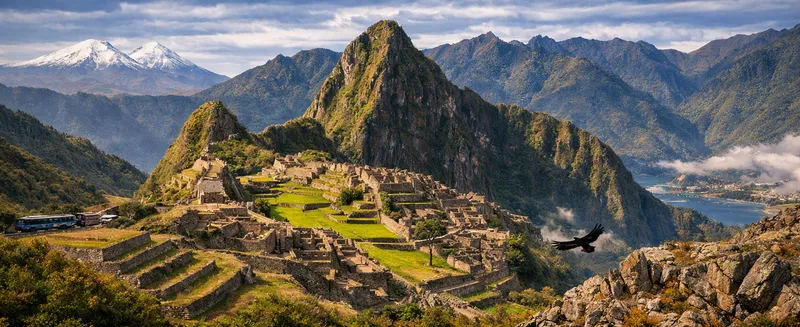
Archaeologists have uncovered one of the most extraordinary Inca sites in recent history: the citadel T'aqrachullo (Ancocagua), a monumental complex spanning 17.4 hectares — nearly four times the size of Machu Picchu.
Hidden on a plateau above the Apurímac River in Espinar province, this discovery is reshaping our understanding of the Inca Empire. For travelers visiting Peru, it's a reminder that the Andes still hold secrets waiting to be revealed.
🎁 FREE — INSTANT DOWNLOAD
Peru Safety & Scam Guide
Common scams, taxi safety, altitude advice, and what to avoid at every major destination. Free PDF — no email required.
Download Free PDF →A quick clarification on that headline number: the "four times larger" comparison refers specifically to Machu Picchu's built citadel — the stone city visitors actually walk through — not the roughly 32,000-hectare protected sanctuary that surrounds it. T'aqrachullo's own archaeologists have pushed back on the more sensational framing for this reason, even while confirming the site's genuinely exceptional scale.
📜 A Forgotten Capital of the Andes
Excavations carried out between 2019 and 2024 revealed more than 600 structures, including temples, ceremonial plazas, and residential compounds. Researchers believe T'aqrachullo was not just a settlement, but a political, economic, and religious hub of the Inca state.
Among the most striking finds are nearly 3,000 sequins of gold, silver, and copper — evidence of advanced craftsmanship and ritual practices. The scale and richness of the site suggest it may have rivaled Cusco itself in importance during the height of the Inca Empire.
The site's history runs deeper than the Inca era alone: beneath the later Inca structures, archaeologists found an earlier Wari occupation layer, including a sealed tomb. It was the Cana — an Aymara-speaking people from the Espinar highlands — who became its long-term custodians. Their loyalty during the empire's southward expansion under Túpac Inca Yupanqui was unusual for the time: rather than being absorbed into a generic subject class, the Cana kept their own name and identity, and T'aqrachullo was elevated in return to a major ceremonial centre within the Inca ritual and trade network.
Local insight: While T'aqrachullo is not yet open to mass tourism, its discovery highlights how much of the Inca world remains undiscovered. For now, Cusco remains the best base for exploring the breadth of Inca heritage — from Sacsayhuamán to the Sacred Valley.
🌍 Why It Matters for Travelers
While Machu Picchu remains Peru's most iconic destination, the discovery of T'aqrachullo proves that the Inca Empire's architectural and cultural achievements extended far beyond the famous citadel. This is not an isolated ruin — it is evidence of a sophisticated civilization operating across the entire Andean region.
For travelers, this means Peru continues to offer new frontiers of exploration — places where history is still being uncovered. It also reinforces why Cusco is such a rich base: the archaeological landscape surrounding it is, quite literally, still revealing its secrets.
🗝️ Is T'aqrachullo the Lost Sanctuary of Ancocagua?
For centuries, colonial chroniclers described a sacred Inca sanctuary called Ancocagua. The 16th-century chronicler Pedro Cieza de León listed it as one of the five most important temple sites in the entire Inca Empire — an oracle famed across the region for its gold and silver. Then it vanished from the historical record entirely.
High-altitude archaeologist Johan Reinhard spent years tracing Ancocagua through colonial manuscripts, place names, and river geography, narrowing his search to the area south of Coporaque — present-day Espinar province. In 1994, a local guide led him to T'aqrachullo, and in 1998 he published his identification of the two sites as one and the same in the journal Andean Past.
The chronicles also preserve a grim account of what happened after the Spanish conquest: defenders at Ancocagua blocked the only path to the summit and held out through a siege led by one of Pizarro's brothers, melting snow for water once supplies ran out. When the Spanish finally broke through, accounts describe some defenders leaping from the cliffs rather than surrendering. Stone weapons, obsidian projectile points, and skeletal remains bearing injuries — all recovered during excavation — are consistent with this account. Researchers remain careful about the identification: it's a strong hypothesis, not a confirmed fact, and much of the site is still unexcavated.
🥾 Can You Visit T'aqrachullo Today?
T'aqrachullo sits in a remote part of Espinar province, roughly six hours from Cusco by road, on a canyon-edge mesa with no natural water source on the summit. This is not, at least for now, part of Peru's standard tourist circuit — there's nothing resembling Machu Picchu's ticketing system or transport infrastructure in place. A handful of specialized local guides in the Espinar area can arrange visits for travelers with a strong interest in Andean archaeology, but it is not a spontaneous day trip from Cusco.
The more accessible way to engage with the discovery right now: in June 2026, a first public exhibition of artifacts recovered from the site — including Wari ceramics, stone tools, and pieces from the gold and silver treasure — opened at the Casa del Inca Garcilaso de la Vega Museum in Cusco's historic centre, putting some of T'aqrachullo's finds within reach of any traveler already visiting the city.
🚀 Plan Your Journey to Cusco
Although T'aqrachullo is not yet open to visitors, Cusco remains the gateway to Peru's greatest archaeological wonders. Combine classic experiences like Machu Picchu, the Sacred Valley, and Sacsayhuamán with emerging sites that showcase the true depth of Inca heritage.
A personalized travel plan makes all the difference — knowing which sites are worth the journey, when to go, and how to get there is exactly the kind of local knowledge that separates a memorable trip from a generic one.
❓ Frequently Asked Questions
Where is T'aqrachullo located?
In the district of Suykutambo, Espinar province, in the Cusco region — on a high mesa above the Apurímac River canyon, roughly six hours by road from Cusco city.
Is T'aqrachullo really four times larger than Machu Picchu?
Only compared to Machu Picchu's built citadel, not the full protected sanctuary. T'aqrachullo covers about 17.4 hectares; Machu Picchu's citadel is smaller than that, but the Machu Picchu Historic Sanctuary that surrounds it spans over 32,000 hectares. The comparison is accurate, but easy to misread.
Is T'aqrachullo the same place as Ancocagua?
Many researchers believe so, based on archaeologist Johan Reinhard's 1998 identification, but it remains a strong hypothesis rather than a confirmed fact.
Can tourists visit T'aqrachullo?
Not as part of a standard itinerary. It isn't set up for mass tourism, though specialized local guides in the Espinar area can arrange visits. A more accessible option is the exhibition of recovered artifacts at the Casa del Inca Garcilaso de la Vega Museum in Cusco.
What does the name T'aqrachullo mean?
It comes from Quechua: t'aqra ("mother rock") and chullo (a water reservoir carved into stone).
📌 Conclusion
The discovery of T'aqrachullo/Ancocagua proves that Peru's archaeological landscape is far richer than we imagined. For travelers, it's a reminder that every journey to Cusco is not just about Machu Picchu — it's about uncovering the hidden chapters of the Inca Empire, some of which are still being written today.