Cusco is where Peru's Andes begin: the old Inca capital at 3,400 metres, and the doorway to the Sacred Valley, Machu Picchu and the high mountains beyond. I plan this route for travellers, and the first thing I tell everyone is that the order you do it in matters more than how much you squeeze in.
Who wrote this and how
By Javier, local guide · Updated October 2026
By Javier, local guide at Peru Local Advisor. This guide comes from the Lima–Cusco–Sacred Valley–Machu Picchu route I plan for travellers, and from the questions that come up every time: what to see first, what to skip, and how not to lose a day to altitude. Entrance prices and rules change often, so treat the figures below as approximate and confirm them at the ticket office.
Cusco was the capital of the Inca Empire, and it still shows: Spanish churches stand on Inca foundations, and perfectly cut Inca walls line ordinary streets. Almost every journey to Machu Picchu, the Sacred Valley, Rainbow Mountain or Humantay Lagoon starts or ends here, which is why the city works as the gateway to the Andes.
Below you will find 20 places in three groups, three itineraries, advice on altitude, a short food and hotel guide, and three common questions answered. If you have been before, our list of hidden gems in Cusco covers the quieter stops.
🎁 FREE — INSTANT DOWNLOAD
Peru Safety & Scam Guide
Common scams, taxi safety, altitude advice, and what to avoid at every major destination. Free PDF — no email required.
Download Free PDF →🗺️ The 20 Essential Places in Cusco and Beyond
Cusco City
Plaza de Armas & Cathedral
Historic Centre · 3,400 m
The Plaza de Armas stands on the Inca Huacaypata, the empire's ceremonial square, and is framed by the Cathedral and the Jesuit church of La Compañía. Inside the Cathedral, look for the Cusco School paintings, including a Last Supper with roast guinea pig.
Local tip: the Cathedral has its own ticket (around S/ 40), not covered by the Boleto Turístico. Go at opening.
Qorikancha
Temple of the Sun · Sacred Site
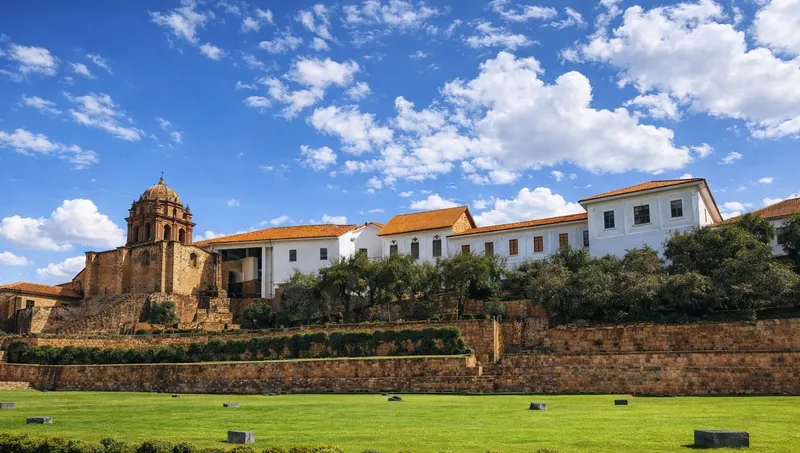
The most sacred temple of the Inca Empire, once covered in gold, now topped by the Santo Domingo convent. Perfectly fitted Inca walls carry colonial arches, and they survived the 1950 earthquake.
Local tip: entry is separate from the Boleto (roughly S/ 15–20). Late afternoon light is best.
San Blas
Artisan Quarter · ~3,450 m
Cusco's creative quarter: steep cobbled lanes, ceramic and textile workshops, small cafés and a church with a famous carved pulpit.
Local tip: climb slowly, only after a night or two at altitude, and take a taxi back down.
Twelve-Angled Stone
Hatunrumiyoc Street · Free
In the wall of what was Inca Roca's palace, one stone locks into its neighbours on twelve angles, with no mortar. It is the quickest lesson in Inca masonry.
Local tip: it is free and always visible. Come early or after dinner, when the lane is quiet.
San Pedro Market
Local Food Market
The best place to see daily Andean life: dozens of potato varieties, fresh cheese, bread and juice counters. It is also a cheap, quick first lunch.
Local tip: go before 11 a.m., carry small bills, and skip raw salads until your stomach has adjusted.
Nearby Ruins
The four ruins above the city (Sacsayhuamán, Q'enqo, Tambomachay and Puca Pucara) and Tipón are covered by the Boleto Turístico, which has to be bought in cash and cannot be replaced by single tickets. The general ticket costs about S/ 130, covers 16 sites and lasts 10 days; the partial circuits cost about S/ 70 each. The Cathedral, Machu Picchu, Maras and Rainbow Mountain are not included.
Sacsayhuamán
Inca Fortress · 3,701 m
Three zigzag terraces of limestone blocks, some weighing over 100 tonnes, fit together without mortar above the city. Every 24 June it hosts the Inti Raymi festival.
Local tip: included in the Boleto (Circuit I). Taxi up, walk down, and bring a windproof layer.
Q'enqo
Carved Sacred Rock
A limestone outcrop carved with zigzag channels, niches and an underground chamber, probably used for rituals linked to the sun and the dead.
Local tip: allow 30 minutes, and go with a guide, since signage is thin.
Tambomachay
Inca Water Temple
Known as the Baño del Inca, it is a set of stone fountains where spring water still runs, a reminder of how sacred water was to the Incas.
Local tip: it is the coldest stop on the route, so bring a layer.
Puca Pucara
Red Fortress
Across the road from Tambomachay, this reddish-stone complex was probably a lookout and way-station on the road into Cusco.
Local tip: it is five minutes on foot from Tambomachay, so treat the two as one stop.
Tipón
Inca Water Engineering
Stone terraces southeast of Cusco watered by channels and fountains that still work after more than five centuries, and far quieter than the sites above the city.
Local tip: part of Circuit II. Combine it with Pikillaqta and Andahuaylillas on a South Valley half day, and try roast cuy in Tipón village.
Sacred Valley and Mountains
Machu Picchu
Inca Citadel · 2,430 m
The citadel above the Urubamba river needs planning: entry is by timed ticket and fixed circuit, with a limited stay inside. The first view of the terraces still stops people mid-sentence.
Local tip: buy the official ticket weeks ahead, especially June to early November (about S/ 150 and up for foreign adults). Take the train from Ollantaytambo and pick an early slot.
Ollantaytambo
Living Inca Town · 2,790 m
A fortress of steep terraces above a town whose Inca street grid is still lived in, and the main station for trains to Machu Picchu.
Local tip: climb at opening, before the buses arrive. Sleeping here before your train saves a very early start.
Moray
Terraced Amphitheatre · ~3,500 m
Concentric circular terraces sunk into the ground, thought to have been used to test crops at different microclimates.
Local tip: it requires the Boleto (Circuit III). Stay on the paths, and pair it with Maras nearby.
Salineras de Maras
Salt Pans · ~3,300 m
Thousands of small salt pans cascade down a mountainside, fed by a salty spring and still worked by local families as in Inca times.
Local tip: not in the Boleto; a small separate fee applies (roughly S/ 10–20). The dry season gives the whitest pans.
Pisac
Market & Hilltop Ruins · ~2,970 m
A handicraft market in the town and an Inca citadel high on the cliffs above. At lower altitude than Cusco, it is a gentle first excursion.
Local tip: ruins first, market afterwards. The market is largest on Sunday, Tuesday and Thursday.
Chinchero
Weavers & Colonial Church · ~3,760 m
A high village where weaving cooperatives demonstrate natural dyes and backstrap looms, beside a colonial church built on Inca foundations.
Local tip: it sits higher than Cusco, so save it for day two or three. Included in Circuit III.
Vinicunca (Rainbow Mountain)
Striped Mountain · ~5,036 m
The most photographed mountain in the region is a serious full-day hike above 5,000 m. Pickups often start around 3–4 a.m., and the last climb is steep and cold.
Local tip: not before two nights at altitude. Entry is around S/ 30 for foreigners and usually included in tours.
Palcoyo
Quieter Coloured Mountains · ~4,900 m
Palcoyo (also spelled Palccoyo) has several coloured viewpoints and a rock forest, with a shorter, gentler walk and far fewer people than Vinicunca.
Local tip: roughly a three-hour drive from Cusco, so leave early. Allow the same two acclimatisation days.
Humantay Lagoon
Turquoise Glacial Lake · ~4,200 m
A turquoise lake beneath a glacier, reached by a steep walk of roughly one to two hours from the Soraypampa trailhead.
Local tip: it needs two acclimatisation days. Leave before dawn to see it before the clouds roll in.
Choquequirao
The Other Machu Picchu · ~3,035 m
A vast Inca site reached only on foot, normally a four- or five-day round trip from Cachora, with terraces hanging above the Apurímac canyon.
Local tip: best from May to September. The route closed for landslides in early 2026 and reopened in April, so confirm access with your operator.
📅 Cusco Itineraries: 3, 5 and 7 Days
All three plans follow one rule: sleep low first, go high later. They start in the Sacred Valley, a few hundred metres lower than Cusco, and save the high mountains for the end. For hotel areas that fit each plan, see our guide on where to stay in Cusco.
3 Days: The Essentials
Day 1 – Sacred Valley: Land and drive straight to Ollantaytambo. Explore the fortress and sleep there. Day 2 – Machu Picchu: Take the morning train and spend the day at the citadel. Day 3 – Cusco: Return to the city for the Plaza de Armas and Cathedral, Qorikancha, and a late walk through San Blas. It is a full plan; skip San Blas if you are tired.
5 Days: Valley, Machu Picchu and the City
Day 1: Pisac market and ruins, then Ollantaytambo. Day 2: Moray, Maras and Chinchero. Day 3: Machu Picchu by train. Day 4: Cusco city on foot: the Plaza and Cathedral, Qorikancha, the Twelve-Angled Stone, San Pedro Market and San Blas. Day 5: The ruins circuit (Sacsayhuamán, Q'enqo, Tambomachay, Puca Pucara) in the morning, then rest, or choose Palcoyo if you have the energy and have slept three nights at altitude.
7 Days: Add the Mountains
Days 1–4: Follow the 5-day plan up to the Cusco city day. Day 5: Ruins circuit and Tipón, with the South Valley churches if you have time. Day 6: Humantay Lagoon, a full day starting before dawn. Day 7: Vinicunca (Rainbow Mountain), or Palcoyo for a gentler day. Choquequirao needs four or five days on foot, so keep it for a separate trip.
🏔️ Altitude and Acclimatisation
Cusco's airport is at about 3,300 metres and the Plaza de Armas at 3,400, while Urubamba is near 2,870 and Ollantaytambo near 2,790. Most travellers arrive from Lima at sea level, so the body gets no gradual adjustment. Altitude sickness (soroche) usually appears as headache, light nausea, poor sleep and breathlessness on stairs, and it tends to hit at night.
The simplest fix is also the most effective: use the Sacred Valley as your acclimatisation base. Spend your first one or two nights there, then go up to Cusco, and only then take on the high excursions. Humantay Lagoon (about 4,200 m) and Rainbow Mountain (over 5,000 m) should come after at least two nights at altitude, never on your first full day.
Drink water, eat light, avoid alcohol on the first night and walk slowly. Many people drink coca tea, and some ask their doctor about acetazolamide before the trip. If breathlessness at rest, confusion or a worsening headache develops, go lower and see a doctor. For more detail, read our guide to avoiding altitude sickness in Cusco.
🍽️ Where to Eat and Sleep
For dinner, Chicha (Gastón Acurio's Andean restaurant) and Morena Peruvian Kitchen are two Cusco favourites; book ahead in high season. Lunch at San Pedro Market is the budget option. For hotels, choose by zone: the Sacred Valley (Urubamba or Ollantaytambo) for your first nights, San Blas for charm and views if you can handle the hills, and the Historic Centre for flat walks and easy transport. Our full breakdown is in where to stay in Cusco.
❓ Frequently Asked Questions
When is the best time to visit Cusco?
The dry season, from May to October, has the clearest skies and the best conditions for Machu Picchu, Vinicunca and Choquequirao. June to August is peak season and the busiest, so book Machu Picchu tickets and trains early. November to April is the rainy season, greener and quieter, with a higher risk of cloud and landslides on remote routes.
How much does it cost to visit Cusco?
Entrance prices add up quickly, and they change, so confirm them locally. As a guide: the Boleto Turístico is about S/ 130 for the general ticket or S/ 70 for a partial circuit, Machu Picchu starts around S/ 150 for foreign adults, the Cathedral is around S/ 40, Qorikancha around S/ 15–20, and Vinicunca around S/ 30. Tours to the mountains often include their entrance fees; city tickets usually do not.
Is Cusco safe for tourists?
Yes, with normal city precautions. The historic centre and San Blas are busy and well patrolled, and the main risks are pickpocketing in markets and crowded sites, and taxis that overcharge. Use app-based or registered taxis at night, agree on a price before you get in, and avoid unlit streets outside the centre. The biggest health risk is actually altitude, so plan your first days carefully.
Physical SIM vs eSIM: Buying a physical SIM in Peru often means long queues at the airport or shopping centres, and you will need to show your passport for registration. To skip the wait and arrive already connected, activating an Airalo eSIM before your flight is the smarter alternative. Use code PERULOCAL for an exclusive 15% discount — and step off the plane with data already running.
✈️ Travel Tip: Save on Roaming Costs in Peru
Travelers can avoid expensive roaming fees by using Airalo eSIMs, the world's first eSIM store with fast, reliable data plans for Peru and 200+ destinations.
Exclusive Offer: Save 15% on your first eSIM with the code PERULOCAL.
Set up your Airalo eSIM before flying and stay connected the moment you land. Buy Your eSIM
Ready to travel smarter? Get Your eSIM Now
Offer valid until December 31, 2026.