
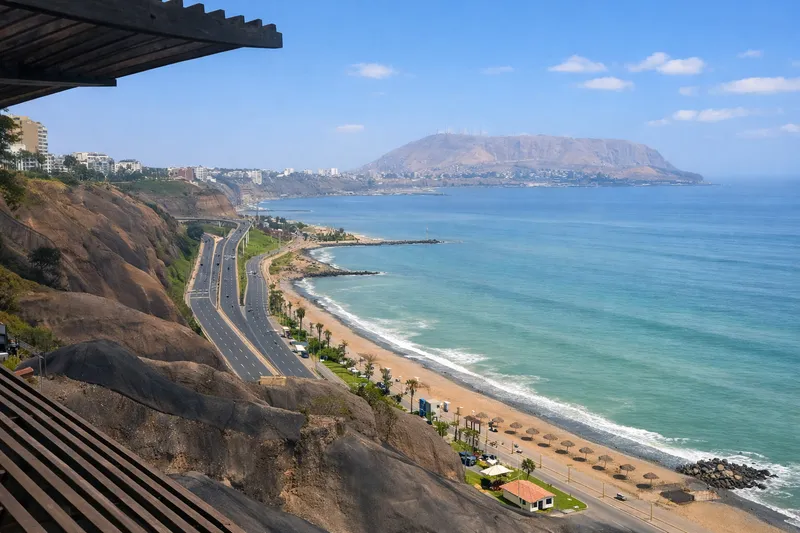
Lima is Peru's coastal capital, a city that blends pre-Columbian history, Spanish colonial grandeur, cutting-edge gastronomy, and a thriving contemporary arts scene.
Many travelers treat Lima as just a transit stop on the way to Cusco or Machu Picchu, but the city deserves far more time. From the dramatic cliffs of Miraflores to the bohemian galleries of Barranco and the colonial plazas of the Centro Histórico, Lima offers experiences that rival any capital city in the Americas. It is also one of the oldest continuously inhabited urban centers in the Americas, with roots stretching back to pre-Hispanic fishing settlements along the Rímac River long before Francisco Pizarro founded the Spanish "City of Kings" in 1535.
This guide walks through Lima's essential landmarks in detail — the plazas, churches, museums, and coastal viewpoints that define the city — along with the history behind each site, what to expect as a visitor, and practical tips gathered from repeat visits. Whether you have two days or two weeks, these are the places that reward the time you give them.
🎁 FREE — INSTANT DOWNLOAD
Peru Safety & Scam Guide
Common scams, taxi safety, altitude advice, and what to avoid at every major destination. Free PDF — no email required.
Download Free PDF →🏛️ Centro Histórico – Lima's Colonial Heart
Declared a UNESCO World Heritage Site in 1988, Lima's historic center preserves one of the largest and best-conserved collections of Spanish colonial and Republican-era architecture in the Americas. This is where the city was formally founded by Francisco Pizarro on January 18, 1535, and where Peru's political and religious life is still centered today. The district rewards slow exploration on foot, ideally paired with our complete Lima travel guide for planning a full day here.
Plaza Mayor de Lima
Founding Square · Political Center of Peru
History: Plaza Mayor (also called Plaza de Armas) is the literal birthplace of Lima, laid out by Pizarro as the geometric center of the new colonial city in 1535. For nearly five centuries it has been the seat of civil and religious power, surrounded by the Government Palace, the Archbishop's Palace, the Municipal Palace, and the Cathedral.
Visitor Experience: The plaza is dominated by a bronze fountain dating to 1651, one of the oldest in the Americas, and framed by elegant colonial balconies carved in cedar and mahogany. Most visitors arrive in the late morning to see the changing of the guard at the Government Palace, held most days around noon.
Highlights: The intricately carved wooden balconies on the surrounding palaces, the bronze fountain, and the symmetry of the square itself, which anchors the entire historic district.
Nearby: The Cathedral, the Archbishop's Palace, and Jirón de la Unión all sit within a two-minute walk, making the plaza the natural starting point for a walking tour of the center.
Tip: Visit on a weekday morning to avoid weekend crowds and get a clear view of the changing-of-the-guard ceremony.
Catedral de Lima
Basílica Catedral · Franciso Pizarro's Resting Place
History: Construction began in 1535 alongside the founding of the city, though the building seen today largely dates from reconstructions after major earthquakes in 1687 and 1746. The Cathedral holds the remains of Francisco Pizarro in a mosaic-tiled side chapel, along with an extensive collection of colonial religious art.
Visitor Experience: Inside, elaborately carved choir stalls, gilded altarpieces, and a small museum of religious art and vestments give a sense of the wealth that flowed through colonial Lima. The building blends Renaissance, Baroque, and Neoclassical elements from its various reconstructions.
Highlights: Pizarro's tomb, the carved wooden choir stalls, and the Museum of Religious Art and Treasures housed within the Cathedral complex.
Nearby: Facing directly onto Plaza Mayor, the Cathedral sits steps from the Archbishop's Palace and a short walk from the Basílica y Convento de San Francisco.
Tip: The Cathedral museum entrance is separate from general church access — allow at least 30 minutes to see both.
Basílica y Convento de San Francisco
Baroque Monastery · Underground Catacombs
History: Completed in 1673, the San Francisco monastery complex is one of the finest surviving examples of colonial Baroque architecture in Lima, having survived major earthquakes better than most of the city's other historic buildings. Beneath the church lie catacombs used as a burial site for an estimated 25,000 people during the colonial period.
Visitor Experience: Guided tours (included with admission) lead through a library of thousands of antique texts, ornate cloisters with hand-painted Sevillian tilework, and finally down into the dimly lit catacombs, where bones are arranged in geometric patterns in stone ossuary pits.
Highlights: The catacombs, the monastery's colonial library, and the cloisters, whose ceilings feature intricate Mudéjar-style wood carving influenced by Moorish design traditions brought from Spain.
Nearby: Just two blocks from Plaza Mayor, making it easy to combine with the Cathedral and Government Palace on the same walking route.
Tip: Photography is not permitted inside the catacombs or library — tours run on a fixed schedule, so arrive a little before a group departs to avoid a long wait.
Jirón de la Unión
Pedestrian Boulevard · Historic Shopping Street
History: This pedestrian street has connected Plaza Mayor to Plaza San Martín since the colonial era and became Lima's premier commercial artery through the 19th and early 20th centuries, lined with Republican-era facades, theaters, and shopfronts.
Visitor Experience: Today the street is a lively pedestrian corridor filled with shops, cafés, street performers, and the occasional colonial-era church tucked between newer storefronts. It's one of the best places to observe everyday Lima life rather than tourist-oriented sights.
Highlights: The Iglesia de La Merced, one of Lima's oldest churches, sits along the route, along with several Republican-era buildings with ornate facades worth looking up to appreciate.
Nearby: The street runs directly between Plaza Mayor and Plaza San Martín, making it the natural connecting route between the two.
Tip: Keep valuables secure and stay aware of your surroundings, as with any busy pedestrian shopping street — see our guide on staying safe in Lima for broader city tips.
Plaza San Martín
Republican Square · National Monument
History: Inaugurated in 1921 to mark the centennial of Peru's independence, Plaza San Martín is one of the finest examples of early 20th-century urban planning in Lima, ringed by Beaux-Arts and neo-colonial buildings including the historic Gran Hotel Bolívar.
Visitor Experience: The plaza centers on a bronze equestrian statue of General José de San Martín, liberator of Peru, and functions as a genuine civic gathering space where locals relax, protest, and pass through daily — offering a more lived-in contrast to the more formal Plaza Mayor.
Highlights: The San Martín monument, the surrounding Republican architecture, and the historic Gran Hotel Bolívar, long associated with the invention of the pisco sour cocktail.
Nearby: Connected to Plaza Mayor via Jirón de la Unión, roughly a 10-minute walk, and close to several colonial churches and Republican theaters.
Tip: The plaza is well lit and active in the evening, but as in most city centers, it's best visited with a group after dark rather than alone.
🌅 Miraflores – Clifftop Elegance
Miraflores is Lima's most polished district, a clifftop neighborhood of manicured parks, upscale shopping, and dramatic Pacific views. For a deeper comparison of how it differs from bohemian Barranco, see our guide to Miraflores vs. Barranco.
Parque del Amor
Clifftop Park · Gaudí-Inspired Mosaics
History: Opened in 1993 and designed by Peruvian sculptor Víctor Delfín, Parque del Amor draws direct inspiration from Antoni Gaudí's Park Güell in Barcelona, translating that same fragmented mosaic style into a distinctly Peruvian setting overlooking the Pacific.
Visitor Experience: Curving benches covered in colorful broken-tile mosaics wind through the park, inscribed with lines of Peruvian love poetry, while Delfín's sculpture "El Beso" (The Kiss) — a dramatic embracing couple — anchors the space. Sunset is the most popular time to visit, when the sky over the ocean turns gold and pink.
Highlights: "El Beso" sculpture, the mosaic-covered serpentine benches, and uninterrupted ocean views from the clifftop edge.
Nearby: Directly connected to the Malecón de Miraflores promenade and a short walk from Larcomar shopping center.
Tip: Arrive about an hour before sunset to find a good bench before the evening crowd builds.
Malecón de Miraflores
Clifftop Promenade · 10 Kilometers of Coastline
History: The Malecón is a chain of parks and pathways developed along the top of Lima's coastal cliffs through the 20th century, gradually connected into a continuous green corridor that now stretches through Miraflores and into neighboring districts.
Visitor Experience: Joggers, cyclists, and paragliders share the clifftop paths, which offer sweeping views over the Costa Verde and the Pacific Ocean far below. Well-maintained gardens, lookout points, and public art are spaced along the route, making it equally suited to a brisk morning walk or an unhurried sunset stroll.
Highlights: Paragliders launching from Parque Raimondi, the lighthouse at Parque Faro, and multiple viewpoints overlooking the surf breaks of the Costa Verde below.
Nearby: Parque del Amor, Larcomar, and Huaca Pucllana are all within easy walking or short taxi distance of the Malecón.
Tip: Watch paragliders launch from the cliffs at Parque Raimondi — tandem flights are also available for visitors who want to fly themselves.
Huaca Pucllana
Pre-Inca Pyramid · Lima Culture Archaeological Site
History: Built primarily between 200 and 700 AD by the Lima Culture, this stepped adobe pyramid predates the Inca Empire by nearly a thousand years and served as a ceremonial and administrative center long before Spanish colonization. Excavation and restoration work continues at the site today.
Visitor Experience: Guided tours lead visitors up through the terraced pyramid structure, past excavated tombs and ceremonial platforms, with knowledgeable guides explaining Lima Culture rituals and construction techniques. The site is illuminated at night, creating a striking contrast against the modern high-rises of Miraflores that now surround it.
Highlights: The stepped pyramid itself, on-site archaeological finds displayed in the small museum, and the unusual sight of a pre-Columbian ceremonial complex standing within a dense modern city block.
Nearby: Located a short taxi ride from the Malecón and Parque Kennedy, within easy reach of central Miraflores hotels and restaurants. Read our full Huaca Pucllana guide for tour options and visiting details.
Tip: Guided entry is required to walk the site — book the first tour slot of the morning or a night tour to avoid midday heat and crowds.
Larcomar
Clifftop Shopping Center · Ocean Views
History: Opened in 1998, Larcomar was built directly into the face of the Miraflores cliffs, an engineering approach that keeps the shopping center almost entirely hidden from the clifftop parks above while opening it fully to the ocean below.
Visitor Experience: Multiple levels of restaurants, cafés, boutiques, and a cinema are arranged around open-air terraces facing the Pacific, making it a natural stop for a sunset meal or coffee break after walking the Malecón. Live music and cultural events are held periodically on the lower terraces.
Highlights: Unobstructed ocean-facing terraces, sunset views from restaurant balconies, and easy access from Parque del Amor above.
Nearby: Sits directly beneath Parque del Amor and the Malecón, connected by stairs and elevators cut into the cliff.
Tip: The upper outdoor terraces offer the best sunset views — arrive before golden hour to secure an ocean-facing table.
🎨 Barranco – Bohemian Soul
Lima's most atmospheric district is a labyrinth of colorful murals, contemporary art galleries, and lively bars just south of Miraflores along the coast.
Puente de los Suspiros
Bridge of Sighs · Barranco's Iconic Landmark
History: Built in 1876, this narrow wooden footbridge crosses a small ravine that once connected the two halves of what was then a quiet fishing and bathing village on Lima's outskirts, long before Barranco was absorbed into the growing city.
Visitor Experience: The bridge takes its name from local tradition holding that anyone who crosses it while holding their breath and making a wish will see it granted. Surrounded by bougainvillea, colonial-era street lamps, and views down toward the ocean, it remains one of the most photographed spots in the district, especially at dusk.
Highlights: The bridge itself, the ravine views toward the Pacific, and the surrounding Ermita chapel and Barranco boardwalk.
Nearby: Directly connected to the Bajada de Baños pathway and a short walk from Barranco's main square and gallery district.
Tip: Come on a Sunday afternoon when locals fill the streets and live music spills out of the surrounding bars.
Bajada de Baños
Historic Ravine Path · Sea Access Walkway
History: This cobblestone path descends through Barranco's ravine down toward the sea, tracing the route once used by 19th-century Limeños to reach the district's beaches and public bathhouses, from which the walkway takes its name ("Descent of the Baths").
Visitor Experience: Lined with murals, small galleries, and flowering vines, the walkway is one of the most photogenic corners of Barranco and a popular spot to watch the sunset over the Pacific from its lower viewpoints, which look out toward the Costa Verde.
Highlights: Street art and murals along the descent, ocean views from the lower section, and the contrast between colonial-era architecture and contemporary graffiti.
Nearby: Begins near the Puente de los Suspiros and leads down toward the Costa Verde coastal road.
Tip: The path is steep and cobbled in places — comfortable shoes make the walk far more enjoyable, especially if continuing down toward the coast.
🏺 Lima's World-Class Museums
Lima's museums hold some of the most important pre-Columbian and colonial art collections in South America, offering essential context for understanding Peru's ancient cultures before or after a trip to Cusco and Machu Picchu.
Museo Larco
Pre-Columbian Art Collection · Pueblo Libre
History: Founded in 1926 by Rafael Larco Hoyle in an 18th-century vice-royal mansion built atop a 7th-century pre-Columbian pyramid, the Larco Museum has grown into one of the most comprehensive private collections of pre-Columbian art in the world.
Visitor Experience: Galleries display gold and silver ceremonial objects, textiles, and pottery spanning more than 4,000 years of Peruvian history, organized to trace the development of successive cultures including the Moche, Nazca, and Chimú. A separate storage gallery holds thousands of additional ceramics, and a well-known erotic pottery gallery examines the role of sexuality in ancient Andean cultures.
Highlights: The gold and silver ceremonial gallery, the extensive open ceramics storage room, and the museum's tranquil gardens and on-site café.
Nearby: Located in the residential district of Pueblo Libre, roughly a 15 to 20 minute taxi ride from both Miraflores and the historic center.
Tip: Budget at least two hours, and consider visiting the garden café for lunch — it's one of the most peaceful settings for a meal in the city.
Museo Nacional de Arqueología
National Archaeology, Anthropology & History Museum
History: Established in 1822 under Peru's founding statesman José de San Martín, this is the oldest state-run museum in Peru, housed in a former mansion in Pueblo Libre that later served as a residence for Peruvian presidents Simón Bolívar and José de San Martín himself.
Visitor Experience: The museum offers the most comprehensive chronological overview of Peruvian civilization available in the country, moving from early hunter-gatherer sites through the Chavín, Paracas, Moche, Nazca, Wari, and Inca periods up to Spanish colonization. Exhibits include textiles, stonework, and the Tello Obelisk, a major carved monolith from the Chavín culture.
Highlights: The Tello Obelisk, Paracas textile displays, and detailed exhibits on the engineering and organization of the Inca Empire.
Nearby: A short walk from Museo Larco in Pueblo Libre, making the two museums easy to combine in a single half-day itinerary.
Tip: Visit this museum before Museo Larco to build chronological context first — it makes the Larco's artifact-focused galleries easier to appreciate.
Museo de Arte de Lima (MALI)
National Fine Arts Museum · Centro Histórico
History: Opened in 1961 inside the former Palacio de la Exposición, a grand Renaissance-style building constructed in 1868, MALI holds the most complete survey of Peruvian art available under one roof, spanning three thousand years from pre-Columbian ceramics to contemporary works.
Visitor Experience: Permanent galleries move chronologically through pre-Columbian textiles and pottery, colonial religious painting, Republican-era portraiture, and 20th-century Peruvian modernism, complemented by rotating contemporary exhibitions. The building itself, set within the Parque de la Exposición, is worth appreciating alongside the art.
Highlights: Colonial-era Cusco School religious paintings, pre-Columbian textile galleries, and a strong collection of 20th-century Peruvian modernist works.
Nearby: Set inside Parque de la Exposición, within walking distance of the Centro Histórico and close to Plaza San Martín.
Tip: Combine a MALI visit with a stroll through the surrounding Parque de la Exposición, which contains gardens and a small Japanese garden pavilion.
💧 Circuito Mágico del Agua
Circuito Mágico del Agua
Magic Water Circuit · Parque de la Reserva
History: Opened in 2007 within Parque de la Reserva, the Circuito Mágico del Agua holds the Guinness World Record for the largest fountain complex in a public park, built as part of a broader restoration of a historic park that had fallen into disrepair through the late 20th century.
Visitor Experience: Thirteen illuminated fountains are spread across the park, including interactive fountains visitors can walk through and a tunnel of water where laser and light shows are projected after dark. Evening visits are the highlight, when the fountains are lit in shifting colors synchronized to music.
Highlights: The Fantasy Fountain's laser light and water screen show, the Tunnel of Surprises walk-through fountain, and the Magic Fountain, the park's largest.
Nearby: Located in the Centro Histórico area near the Estadio Nacional, an easy taxi ride from both the historic center and Miraflores. See our dedicated Circuito Mágico del Agua guide for show times and visiting tips.
Tip: Visit after sunset when the fountains are illuminated — the daytime experience is pleasant but far less impressive than the evening light shows.
🐬 Islas Palomino – Sea Lion Colony
Islas Palomino
Wildlife Excursion · Callao Coast
History: The Palomino Islands are a small archipelago off the coast of Callao, Lima's port city, formed of rocky outcrops that have long served as a natural breeding ground for South American sea lions and a resting point for seabirds along the cold Humboldt Current.
Visitor Experience: Boat excursions depart from Callao's harbor and take roughly 90 minutes each way, passing Peruvian naval vessels and coastal guano islands before reaching the sea lion colony, where thousands of animals haul out on the rocks. Some tours allow swimming with the sea lions in the surrounding waters for visitors comfortable in cold-water conditions.
Highlights: Close-up views of a massive wild sea lion colony, Humboldt penguins and diverse seabirds spotted en route, and the open-water crossing itself, which offers a different perspective of Lima's coastline.
Nearby: Departures leave from Callao, roughly 30 to 45 minutes by taxi from Miraflores — check our Lima airport guide if combining this trip with an early flight, since Jorge Chávez International Airport is also located in Callao.
Tip: Pacific waters here are cold year-round — bring a windbreaker for the boat ride regardless of the season, and expect choppier water during Lima's winter months (June–September).
🍽️ Lima's World-Class Food Scene
Lima is widely considered the gastronomic capital of Latin America, a reputation built on the fusion of Indigenous Andean ingredients, Spanish colonial technique, and waves of Chinese, Japanese, and Italian immigration that shaped modern Peruvian cuisine. For the classic Lima experience, fresh ceviche is best enjoyed at a traditional cevichería in Miraflores or Barranco at lunchtime, when the catch is freshest. For fine dining that regularly ranks among the world's best, several Lima restaurants have earned international recognition for reinterpreting Peruvian ingredients through a contemporary lens — though the city's simpler, family-run cevicherías and anticucherías are just as essential to understanding Lima's food culture.
🌙 Nightlife
Barranco's bars and rooftop lounges come alive after 10 PM, with live salsa, electronic music, and craft cocktails spilling out onto the district's cobbled streets. Miraflores offers a more upscale alternative along Avenida La Paz, with wine bars and lounges catering to a slightly older crowd. Lima's nightlife is genuinely world-class and runs late into the night on weekends, particularly in Barranco, which functions as the city's creative and social hub after dark.
🏄 Beaches & Adventure
The Costa Verde, the stretch of coastline below the Miraflores and Barranco cliffs, offers surfing, paragliding launches from the clifftops above, and a string of seaside restaurants built into the rock face. Surf schools along the Costa Verde cater to beginners, while more experienced surfers head to the breaks at Punta Hermosa and Punta Rocas, about 40 minutes south of the city, which attract competitive surfers year-round thanks to the consistent Pacific swell.
Physical SIM vs eSIM: Buying a physical SIM in Peru often means long queues at the airport or shopping centres, and you will need to show your passport for registration. To skip the wait and arrive already connected, activating an Airalo eSIM before your flight is the smarter alternative. Use code PERULOCAL for an exclusive 15% discount — and step off the plane with data already running.
✈️ Travel Tip: Save on Roaming Costs in Peru
Travelers can avoid expensive roaming fees by using Airalo eSIMs, the world's first eSIM store with fast, reliable data plans for Peru and 200+ destinations.
Exclusive Offer: Save 15% on your first eSIM with the code PERULOCAL.
Set up your Airalo eSIM before flying and stay connected the moment you land. Buy Your eSIM
Ready to travel smarter? Get Your eSIM Now
Offer valid until December 31, 2026.