
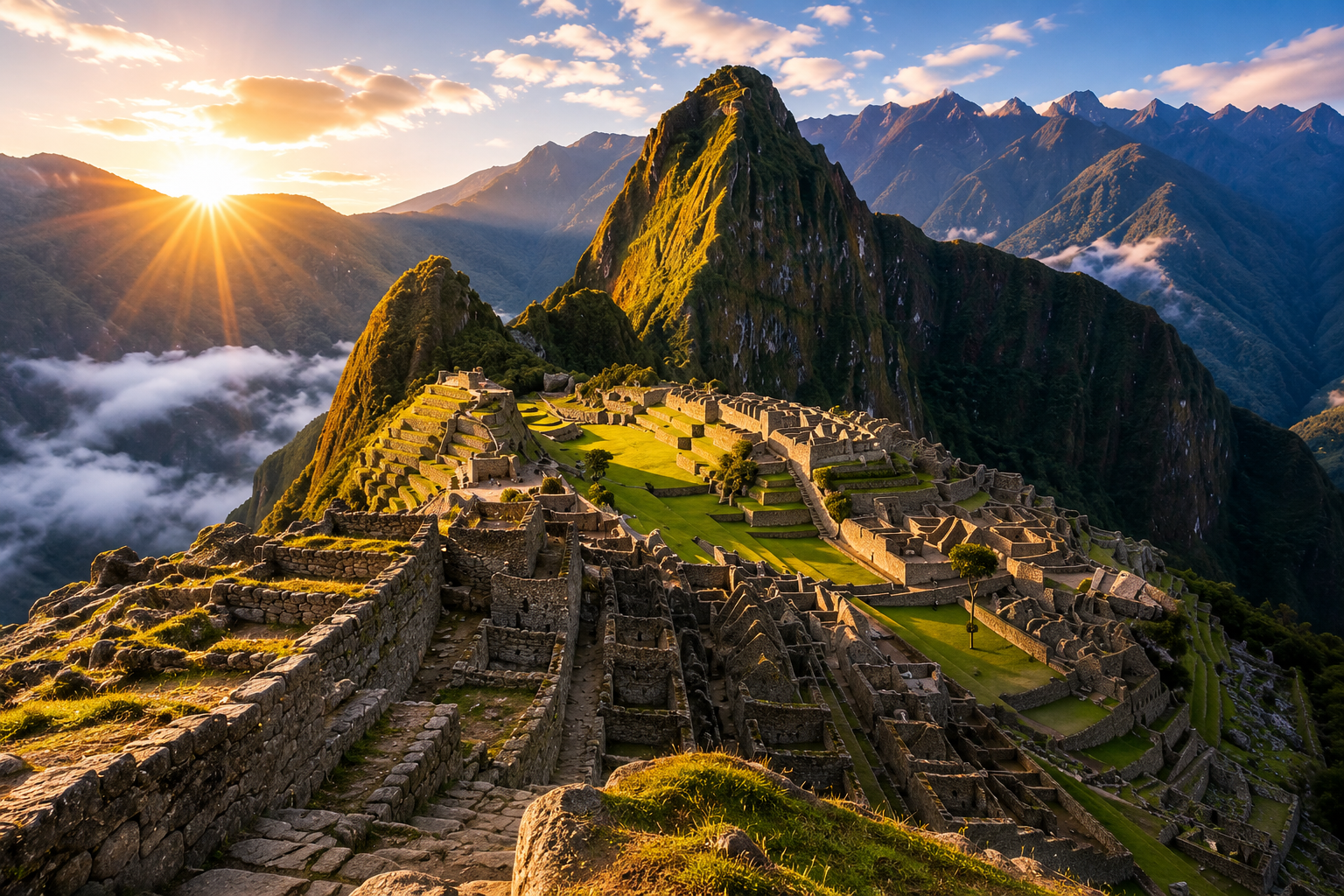
There is no road that leads to Machu Picchu. No highway, no bus terminal at the gates, no possibility of driving your own car up to the citadel. That single fact surprises more travelers than anything else about planning this trip — and it is exactly why understanding the journey matters as much as understanding the ruins themselves.
Reaching Machu Picchu is a journey built in layers: a flight into the Andes, a road transfer through the Sacred Valley, a train that threads along a river gorge, and a final short bus ride up a mountainside. Each layer has several ways to do it — some fast, some scenic, some luxurious, some athletic — and the combination you choose shapes the entire feel of your trip. This guide walks through every stage of that journey, honestly comparing your options so you can build the route that fits your time, your travel style, and the kind of trip you actually want to have.
Part of what makes this planning process unusual, compared with most famous landmarks, is that the citadel was deliberately built in one of the most inaccessible places imaginable. The Inca built it on a narrow ridge between two peaks, high above a river gorge, reachable only by the trail network they themselves engineered. That isolation is precisely what protected it from Spanish colonizers who never found it, and it's the same isolation that shapes every transportation decision you'll make today. Modern engineering has never closed that gap with a road, and — by design, under Peruvian heritage protection rules — it likely never will. Every visitor, from backpacker to head of state, arrives the same fundamental way: by rail or on foot.
🗺️ The Journey in Overview
Before getting into specific trains and timings, it helps to see the whole route at once. Almost every visitor to Machu Picchu follows the same basic sequence, regardless of which specific transport they choose at each stage:
What varies enormously between travelers is how each of those steps is completed. You might drive the Sacred Valley leg privately or share a mixed group tour vehicle. You might take a panoramic-window Vistadome train or splurge on the fully staffed Hiram Bingham. You might skip the train from Ollantaytambo altogether and walk in over four days on the Inca Trail. This guide covers every one of those choices in the order you'll actually make them.
✈️ Stage 1: Getting to Cusco
Flying from Lima
Jorge Chávez Airport (LIM) → Alejandro Velasco Astete Airport (CUZ)
Nearly every Machu Picchu trip begins with a domestic flight from Lima to Cusco. The flight itself takes about 1 hour and 20 minutes, and several airlines — LATAM, Sky Airline, JetSMART, and Star Perú — operate multiple daily departures, particularly in the early morning. Morning flights are worth prioritizing: Cusco's mountain-ringed airport is prone to afternoon winds and cloud buildup that occasionally cause delays or cancellations later in the day, so an early departure gives you a buffer if plans need to shift.
It's worth building at least one buffer day into your itinerary between landing in Lima and boarding your train to Machu Picchu. Flight delays, missed connections, or simply needing rest after a long-haul flight are common enough that treating your Cusco flight as the very last piece of a tightly-timed puzzle is asking for stress. Travelers arriving from North America or Europe frequently land in Lima in the evening or overnight, meaning the earliest realistic Cusco flight is the following morning — plan your Machu Picchu train for at least a day or two after that, not the same afternoon.
If you have already read our Lima Airport Guide, you know that international and domestic terminals at Jorge Chávez are connected but require you to re-check in — allow at least three hours if you're arriving internationally and continuing straight to Cusco on the same day.
Tip: Book a window seat on the left side of the aircraft flying into Cusco for sweeping views of the Andes and the Vilcanota mountain range as you descend.
Flying Direct from Other Cities
Skipping Lima Entirely
Travelers who want to avoid an extra layover can occasionally find direct or connecting flights into Cusco from Arequipa, Puerto Maldonado, or La Paz (Bolivia) — useful if Machu Picchu is one stop on a wider South America itinerary rather than a standalone Peru trip. There is currently no scheduled international service directly into Cusco from outside the region, so Lima remains the practical hub for almost all overseas visitors.
Arriving in Cusco & Acclimatizing
3,400m / 11,150ft — Plan a Buffer Day
Cusco sits considerably higher than Machu Picchu itself (2,430m), and altitude sickness is a genuine concern for many travelers regardless of fitness level. The single best piece of advice we can give: do not fly into Cusco and continue straight to Machu Picchu on the same day. Spend at least one full day in Cusco or the lower-altitude Sacred Valley before your train, resting, hydrating, and letting your body adjust. For a full breakdown of symptoms and prevention, see our guide on how to avoid altitude sickness in Cusco.
Tip: Many experienced travelers base themselves in the Sacred Valley (around 2,800m) rather than Cusco city for the first night or two — the lower elevation makes acclimatization noticeably easier.
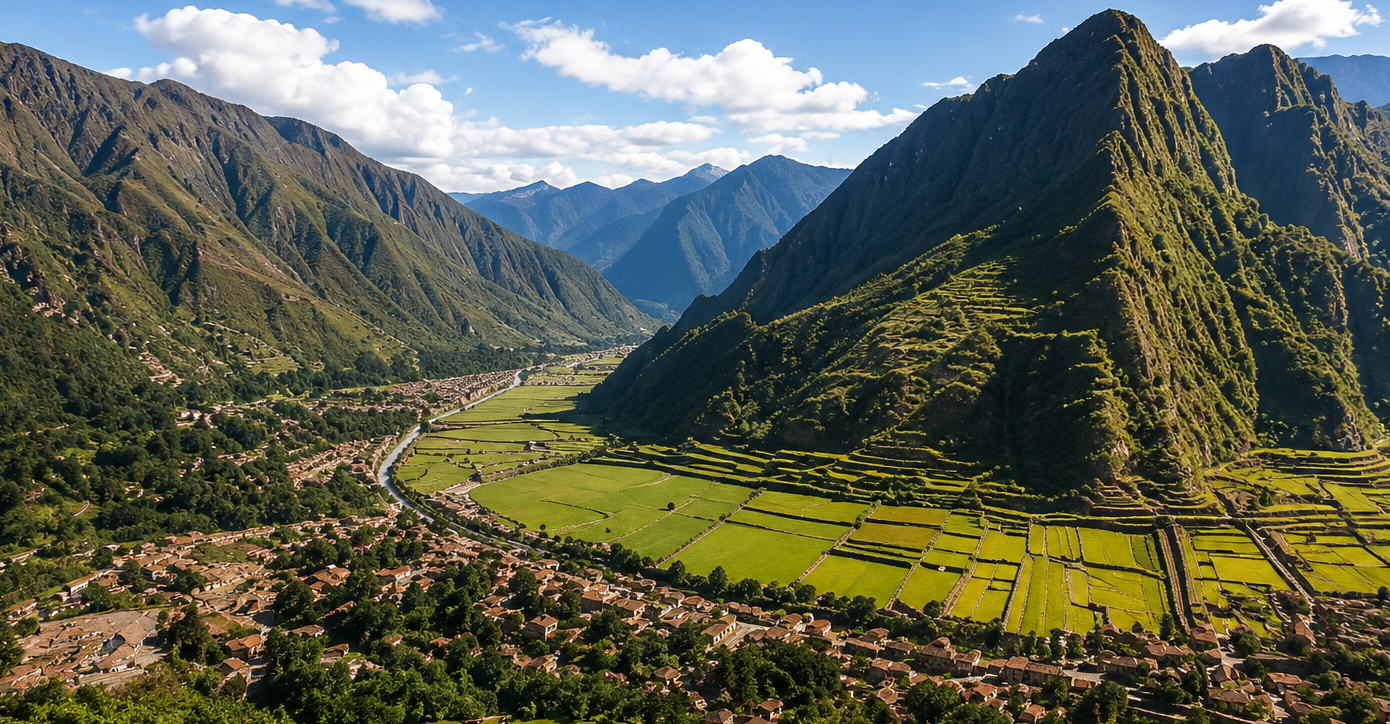
🚐 Stage 2: Cusco to the Sacred Valley & the Train Stations
Trains to Machu Picchu do not depart from Cusco's city center in most cases — they leave from stations further down the valley, closer to the ruins. Understanding this stage well can save you hours and unnecessary cost.
Poroy Station (Near Cusco)
10 minutes from Cusco city · Higher elevation · Fewer daily departures
Poroy is the closest train station to Cusco, roughly a 15 to 20-minute taxi ride from the historic center. It's convenient if you're short on time, but it sits at a similar altitude to Cusco itself, offers a limited number of daily departures compared with Ollantaytambo, and the train ride from here to Aguas Calientes takes longer — around 3.5 to 4 hours — because it covers more distance through the valley.
Ollantaytambo Station (Recommended for Most Travelers)
70–90 minutes from Cusco by road · Lower elevation · Most departures
Ollantaytambo is the busiest and most practical station for the vast majority of visitors. It sits deeper in the Sacred Valley at a lower, more comfortable altitude, and because it's closer to Aguas Calientes, the train ride from here is shorter — typically 1 hour 30 minutes to 2 hours. Most travelers combine the transfer here with a stop at Sacred Valley highlights along the way: the market town of Pisac, the salt pans of Maras, or the agricultural terraces of Moray. Private transfer, shared shuttle vans, and tourist buses (colectivos) all run this route regularly, and hiring a private driver for the day is a popular way to see the valley en route to the station.
The town of Ollantaytambo itself is worth arriving early for rather than treating as a mere transfer point. It's one of the few places in Peru where you can walk on original Inca streets still in daily use, with water channels running alongside cobbled lanes exactly as they were laid out centuries ago, beneath the dramatic terraced fortress that gives the town its name. Even a two-hour stop before your train is enough to climb the fortress terraces and get a genuine feel for Inca urban planning before you ever reach Machu Picchu itself.
Tip: Sleeping in Ollantaytambo or elsewhere in the Sacred Valley the night before your train is one of the smartest logistics decisions you can make — it removes the road transfer entirely from your travel day and lets you board rested.
Urubamba Station
Seasonal & Limited Departures
A small number of trains, mostly during peak season, depart from Urubamba, further up the valley from Ollantaytambo. It's rarely the first choice unless your specific hotel or tour itinerary routes you through it directly.
For travelers who want to explore the valley properly rather than treat it as a pass-through, our Sacred Valley Travel Guide covers the best stops, market days, and ruins worth building into this leg of the journey.
🚂 Stage 3: The Train to Aguas Calientes
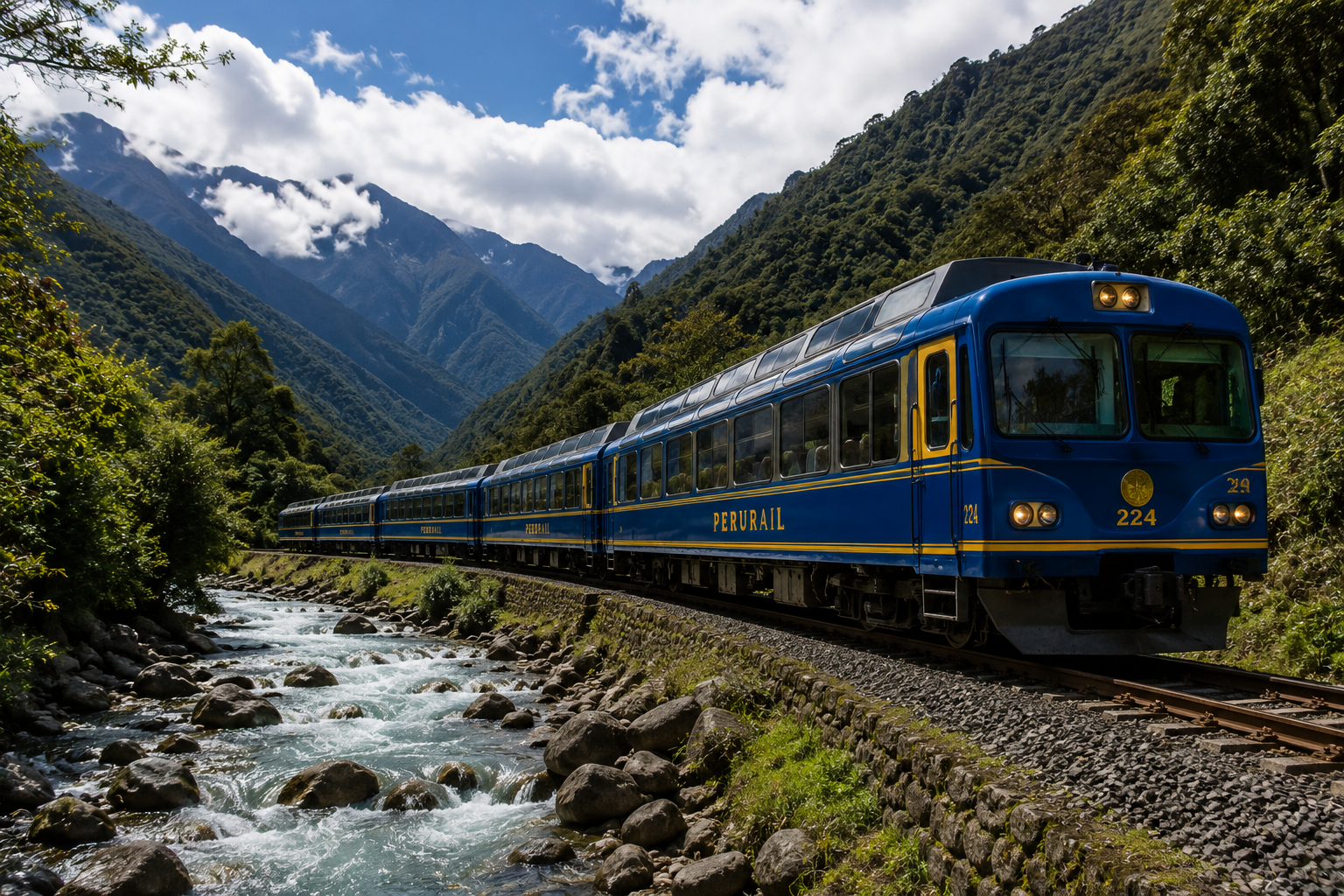
This is the leg most people picture when they imagine the journey to Machu Picchu — and it's genuinely one of the most scenic train rides in South America, following the Urubamba River as it narrows into a cloud-forest gorge. Two companies operate this route, and choosing between them is mostly a question of schedule and departure station rather than quality, since both run modern, comfortable rolling stock.
PeruRail
The Original Operator · Departs Poroy, Ollantaytambo & Urubamba
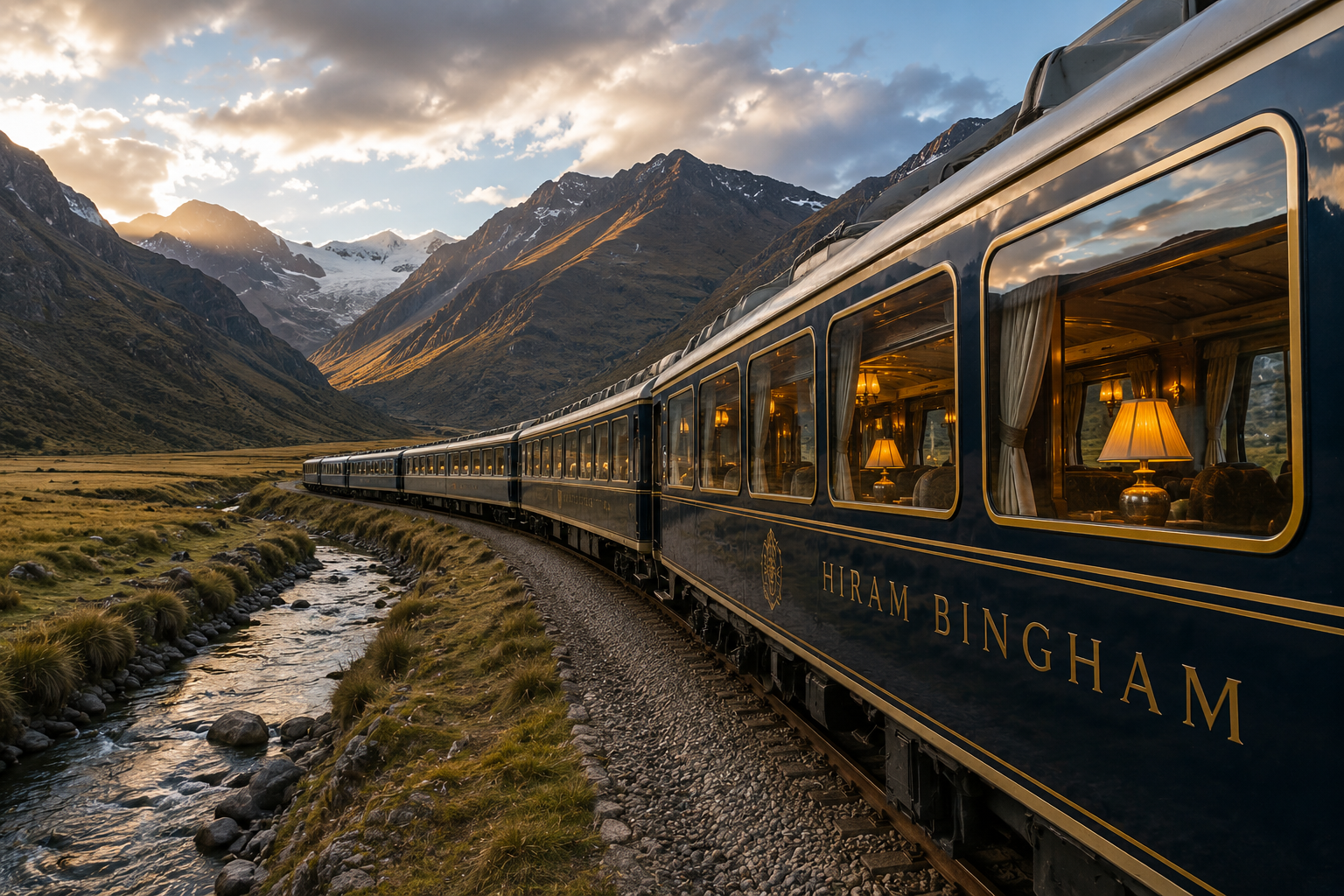
PeruRail has run trains into Machu Picchu for decades and offers the widest range of departure points and service tiers. Its entry-level class, the Expedition, has large panoramic windows and is a comfortable, no-frills way to make the journey — it's the workhorse of the route and perfectly pleasant, just without the extra flourishes of the pricier classes. Above that sits the Vistadome, with even larger windows that curve up into the roofline, onboard snacks, and occasionally a short folkloric dance performance near the end of the ride. At the top of PeruRail's range is the Hiram Bingham, covered separately below as a full luxury experience rather than a simple train ticket.
PeruRail also periodically runs seasonal or limited services along this corridor, so it's worth checking current departures directly on their site when you're ready to book rather than assuming last year's schedule still applies — Peru's rail network updates its offerings and timetables from season to season.
Inca Rail
Departs Ollantaytambo Only
Inca Rail operates exclusively from Ollantaytambo and offers a similarly tiered lineup: the Voyager as its standard panoramic-window service, The 360° with glass roof sections for wider views, and The First Class and The Private for travelers wanting a more exclusive, personalized experience with premium dining service. Because Inca Rail only departs from Ollantaytambo, it's not an option if you're boarding from Poroy near Cusco.
Tip: Midday departures tend to have more seat availability than the early-morning and late-afternoon trains, which fill up first as travelers plan their day around sunrise or a full afternoon at the citadel.
Luggage, Timing & Booking
What to Know Before You Book
Both operators enforce a carry-on limit of around 5 kilograms (11 lbs) per passenger on the train, with larger bags left behind at your hotel or in valley storage — this is not the leg of the trip to bring a full suitcase. Trains run throughout the day, roughly from early morning until early evening, and journey times vary by class and departure station, generally between 1.5 and 4 hours. Because seats are limited and demand is high — especially June through September and around national holidays — booking your train tickets as early as possible, ideally alongside your Machu Picchu entrance ticket, is essential rather than optional.
🚌 Stage 4: Aguas Calientes to Machu Picchu
Once your train arrives in Aguas Calientes (also called Machu Picchu Pueblo), the citadel itself is still about 400 meters higher up the mountainside. The town exists almost entirely to serve visitors on their way to the ruins — a compact grid of hotels, restaurants, and craft shops tucked into a steep river valley, with the Urubamba running right through the center and hot springs (the town's namesake) a short walk from the plaza. It has no vehicle access from the outside world beyond the rail line and the walking trails, which gives it an unusually contained, almost island-like feel even though it sits on the mainland. From here you have two options for reaching the citadel itself.
The Consettur Bus
Most Popular Option · ~25 Minutes · Runs from Dawn
The official shuttle bus, operated by Consettur, climbs a series of switchbacks from the town center to the entrance gate in about 25 minutes. Buses begin running very early — from around 5:30am, which is how sunrise visitors make it to the top in time — and continue at frequent intervals throughout the day. Round-trip tickets are purchased in advance or at the ticket office beside the boarding area in town, and during peak hours the queue for the first buses of the day can be substantial, so arriving 30 to 45 minutes before you want to board is wise if you're chasing sunrise light over the ruins.
Tip: Buy your bus ticket the afternoon before if you're planning an early sunrise ascent — it saves valuable time in the pre-dawn queue.
Walking Up
For the Fit & Adventurous · 60–90 Minutes
A steep stone staircase climbs directly from Aguas Calientes to the citadel entrance, cutting across the switchbacks the bus follows. It's free, it's a genuine leg-burner, and it's a satisfying way to arrive if you're already trekking-fit and want to save the bus fare. Start well before sunrise if this is your plan, bring a headlamp, and expect roughly 60 to 90 minutes of steady climbing.
🥾 Alternative Routes: Hiking In on Foot
Not every traveler wants to arrive by train. For those who want the journey itself to be the highlight, several multi-day trekking routes end at Machu Picchu's Sun Gate, delivering an entrance experience that no train ticket can replicate.
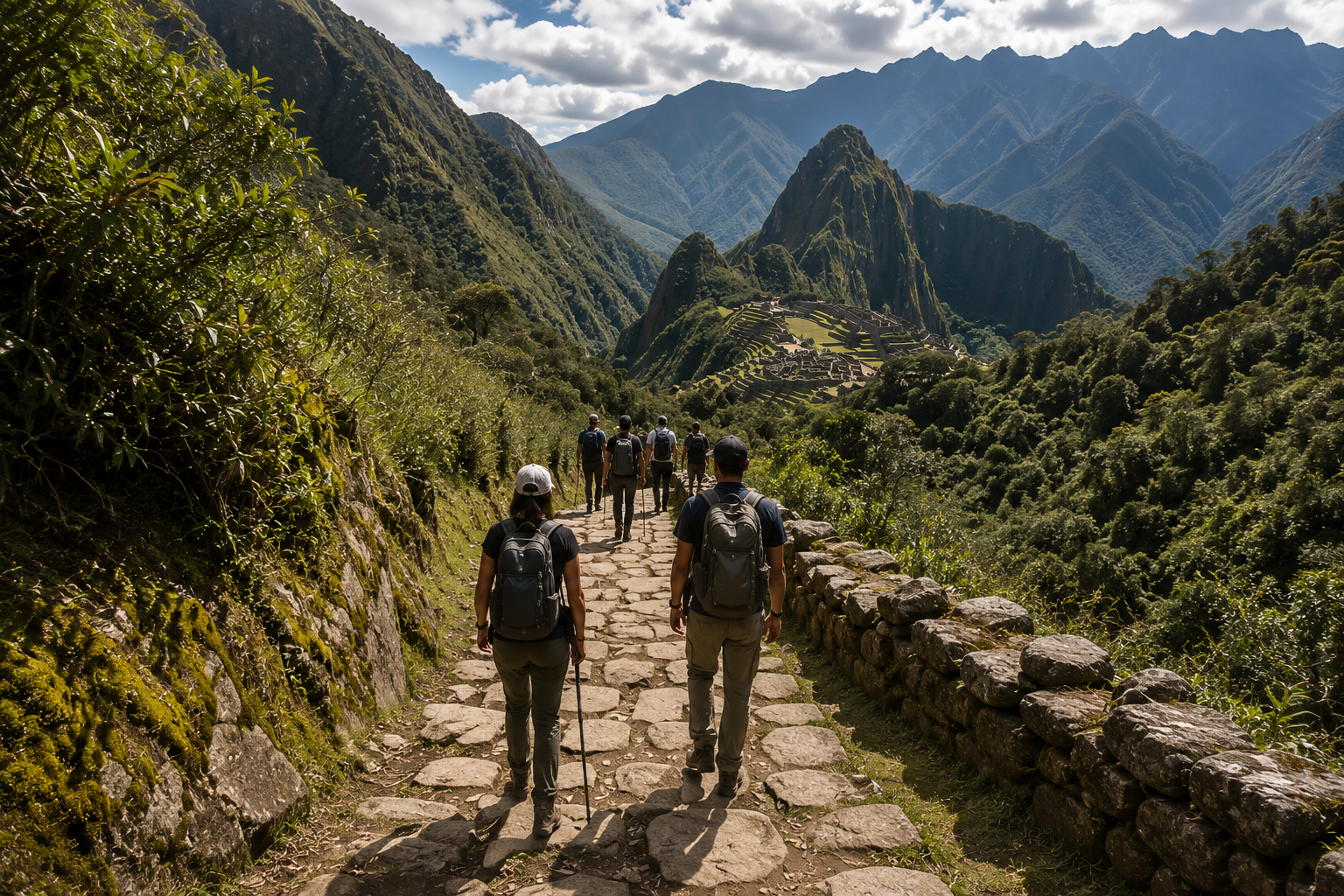
The Classic Inca Trail
4 Days / 3 Nights · Moderate–Challenging · Permits Required
The original 43-kilometer Inca stone highway to Machu Picchu, crossing high mountain passes (the highest, Dead Woman's Pass, sits at 4,215m) and passing several Inca sites accessible only on foot. This is the only route that ends by walking through the Sun Gate (Inti Punku) with the citadel spread out below at sunrise — an experience many trekkers describe as the highlight of their entire Peru trip. Government-mandated permits are extremely limited (around 500 per day including guides and porters) and regularly sell out five to six months in advance during high season, so this route requires the earliest planning of any option in this guide.
Short Inca Trail
2 Days / 1 Night · Moderate · A Taste of the Classic Route
For travelers who want the Sun Gate arrival without committing four full days, the Short Inca Trail covers the final stretch of the classic route — typically starting around kilometer 104 by train, hiking roughly 12 kilometers to the Sun Gate, and descending into Machu Picchu the same afternoon, with the option to explore the citadel again the following morning. It still requires the same limited permits as the full trail, so early booking still matters.
Salkantay Trek
5 Days / 4 Nights · Challenging · No Permit Required
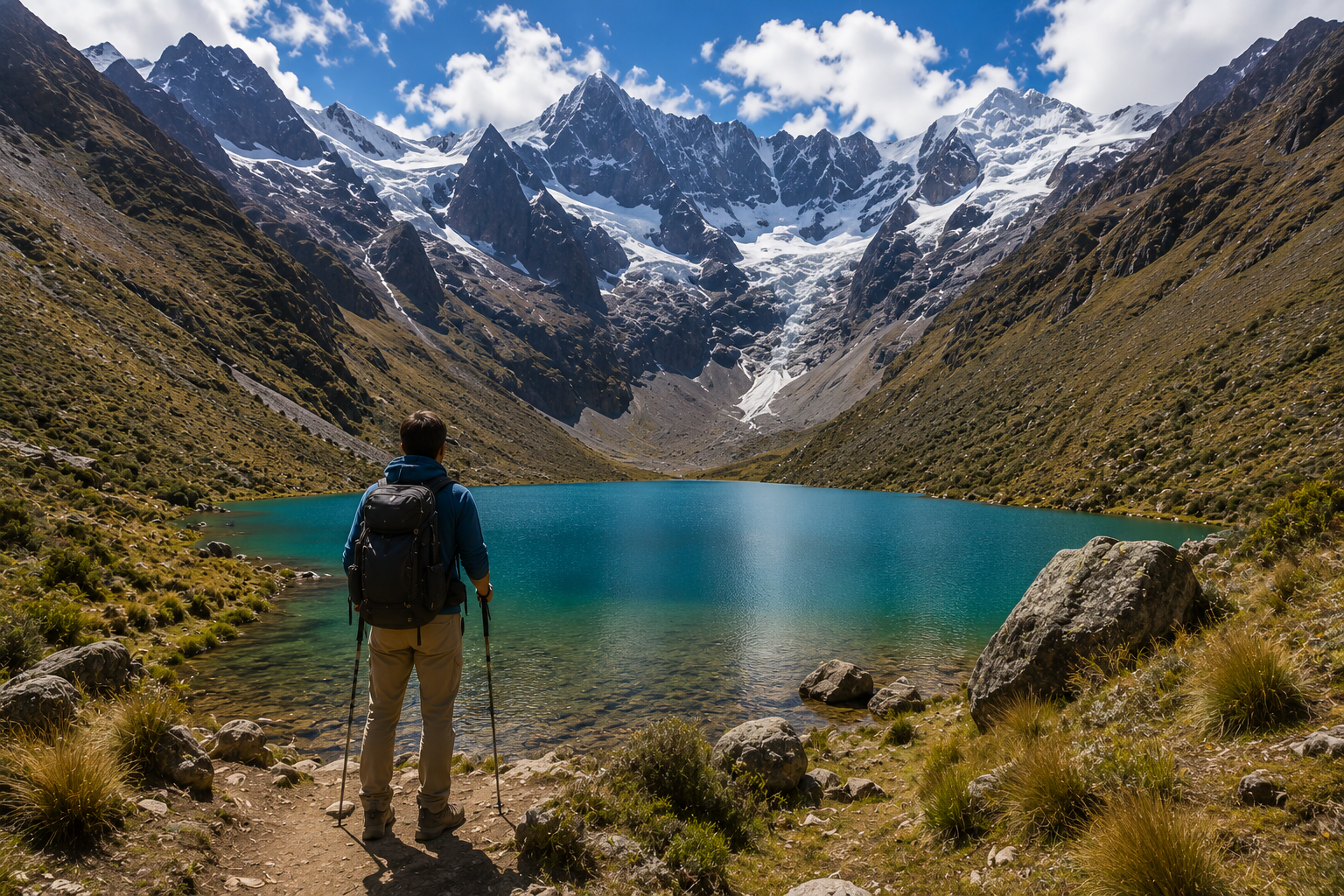
An increasingly popular alternative that climbs even higher than the Inca Trail — crossing the Salkantay Pass at roughly 4,650 meters beneath a glaciated 6,271-meter peak — before descending through cloud forest to meet the rail line and continue into Aguas Calientes by train or on foot along the tracks. Because it uses public trails rather than the restricted Inca Trail corridor, it does not require an advance government permit, making it a good option for travelers planning their trip on shorter notice. It's physically demanding, with a longer and higher trekking profile than the Inca Trail, and best suited to travelers with genuine hiking fitness and time to acclimatize properly beforehand.
Lares Trek & Other Andean Routes
2–4 Days · Moderate · Cultural Focus
The Lares Trek and several similar routes prioritize contact with traditional Quechua weaving villages and quieter Andean scenery over Inca ruins along the way, typically finishing by joining the train network to reach Aguas Calientes rather than walking directly into the citadel. Trekkers pass through small highland communities where alpaca herding and traditional weaving remain part of daily life, often stopping to see natural dyeing techniques passed down through generations — a very different, more intimate flavor of Andean culture than the archaeological focus of the Inca Trail. These are a good middle ground for travelers who want a genuine trek without the permit pressure or physical demands of the Inca Trail or Salkantay, and they typically see far fewer other hikers along the way.
🥂 The Luxury Route: Hiram Bingham Train
A Complete Experience, Not Just a Train
PeruRail's Flagship Service · Poroy ↔ Aguas Calientes
For travelers who want the journey itself to feel like part of the celebration — honeymooners, milestone anniversaries, or simply those who prefer to travel well — the Hiram Bingham is less a train ticket and more a full day built around the ride. Polished wood-panelled carriages, a piano bar car, brunch or a multi-course dinner served on the outbound and return legs, and an included guided tour of Machu Picchu with entrance ticket bundled into the fare are all part of the package. It departs from Poroy near Cusco, runs to Aguas Calientes, and returns the same evening, meaning it's possible to visit Machu Picchu in a single elegant day without an overnight stay in the valley, if your schedule requires it.
Tip: Because the fare bundles the train, guided tour, entrance ticket, and meals into a single reservation, it removes nearly all day-of logistics — worth weighing against a self-arranged itinerary if a seamless, fully hosted experience matters to you.
🎒 The Guided Full-Day Tour from Cusco
When You Want Everything Arranged
Best for First-Timers & Time-Limited Travelers
If coordinating trains, buses, entrance tickets, and transfers independently sounds like more logistics than you want to manage, a guided full-day (or two-day) tour from Cusco handles the entire route as a single package: hotel pickup, the road transfer through the Sacred Valley, the train, the bus up the mountain, and a knowledgeable guide walking you through the citadel's history on-site. This is consistently the most popular option for first-time visitors, families traveling with children, and anyone who would rather spend their planning energy on the rest of their Peru itinerary.
📅 Sample Itineraries for Each Timeframe
Seeing the stages laid out as a checklist is useful, but most people plan more naturally around a number of days. Here's how the journey typically looks depending on how much time you can give it — and if you're still deciding how many days to give Peru as a whole, our guide on planning a 7, 10, or 14-day Peru trip is a useful starting point.
The 1-Day Version (Tight on Time)
Base yourself in Cusco or the Sacred Valley the night before. Take an early road transfer to Ollantaytambo, board a morning train to Aguas Calientes, spend three to four hours exploring the citadel with a guide, then catch an afternoon train back and return to Cusco by evening. This is achievable but leaves no margin for delays and skips an overnight in the valley — it suits travelers with a hard deadline elsewhere in their trip more than it suits anyone chasing a relaxed pace.
The 2-Day / 1-Night Version (Most Recommended)
Transfer to the Sacred Valley in the morning, exploring Pisac or Ollantaytambo along the way, and take an afternoon or early evening train into Aguas Calientes. Sleep in town, rise before dawn, and take one of the first buses up to catch sunrise over the citadel with far fewer crowds than the mid-morning peak. Spend the rest of the morning exploring at an unhurried pace, then descend and take an afternoon train back. This is the balance most first-time visitors land on, and it's the version this guide implicitly assumes throughout.
The 3+ Day Version (Combined with the Sacred Valley)
Spend two full days properly exploring the Sacred Valley — Pisac's market and ruins, the salt pans at Maras, the circular terraces at Moray, and Ollantaytambo's fortress — sleeping in the valley to acclimatize before continuing to Aguas Calientes on day three. This is the version we generally recommend if your overall Peru itinerary allows it, since the Sacred Valley rewards unhurried exploration and rushing through it purely to catch a train undersells one of the most beautiful regions in the country.
The Multi-Day Trekking Version
For the Classic Inca Trail, Salkantay, or Short Inca Trail, the trek itself replaces the road-and-rail stages entirely, ending either at the Sun Gate or by joining the rail line for the final approach. Add at least one buffer day in Cusco before starting any trek to acclimatize, since starting a multi-day hike straight off a flight from sea level is one of the more common — and avoidable — mistakes trekkers make.
⚠️ Common Mistakes to Avoid
Booking the train before the entrance ticket. Machu Picchu entrance tickets are sold by timed circuit and have their own daily caps, separate from train capacity. Booking a train for a date when your preferred circuit or the Huayna Picchu add-on is already sold out is a frustrating and entirely avoidable mistake — check ticket availability first, or book both together through a tour operator.
Flying into Cusco and heading straight to the train. Skipping acclimatization is the single most common regret travelers report after this trip. Altitude sickness can turn what should be a highlight of your journey into a miserable, headache-filled day — build in rest time even if your schedule feels tight.
Underestimating the road transfer time. The drive from Cusco to Ollantaytambo can take considerably longer than expected if you're stopping at Sacred Valley sites along the way, or if traffic through Cusco's city streets is heavy in the morning. Build in more time than you think you need, particularly if you're booked on a specific train departure with no flexibility.
Packing your whole suitcase for the train. The 5kg carry-on limit catches travelers off guard more often than any other rule on this route. Pack a separate small daypack for the Aguas Calientes leg and leave your main luggage in secure storage at your Cusco or Sacred Valley hotel.
Assuming you can buy same-day tickets in high season. Walk-up availability on trains and Machu Picchu entrance tickets does exist outside peak months, but June through September regularly sells out weeks ahead. Treat advance booking as the default plan, not a backup.
📊 Comparing Every Route at a Glance
With so many combinations possible across the four stages, here's how the main approaches compare when it comes to duration, physical effort, and who they suit best.
| Route | Typical Duration | Physical Effort | Best For |
|---|---|---|---|
| Standard Train (Expedition / Voyager) | 1 day, Cusco to Machu Picchu | Minimal | Independent travelers who prefer simplicity |
| Vistadome / 360° Train | 1 day | Minimal | Couples, families, first-timers wanting comfort |
| Guided Full-Day Tour | 1 long day, all arranged | Minimal | First-timers, seniors, hands-off planners |
| Hiram Bingham Luxury Train | 1 day, fully inclusive | Minimal | Honeymooners, luxury travelers, special occasions |
| Short Inca Trail | 2 days / 1 night | Moderate | Active travelers short on time |
| Classic Inca Trail | 4 days / 3 nights | Challenging | Adventure travelers, bucket-list hikers |
| Salkantay Trek | 5 days / 4 nights | Very Challenging | Fit hikers booking closer to travel dates |
🧭 Which Route Fits Your Trip?
👨👩👧 Families
A Vistadome train combined with an overnight in Aguas Calientes gives kids room to enjoy the ride without an early-morning rush, and avoids the physical demands of trekking.
💍 Honeymooners & Couples
The Hiram Bingham or a Vistadome/360° train paired with a night at a Sacred Valley luxury lodge turns the journey itself into part of the celebration.
🧓 Senior Travelers
A guided full-day tour or a private transfer plus Vistadome train removes nearly all logistics and physical strain — the bus up to the citadel is the only unavoidable climb.
🥾 Adventure Travelers
The Classic Inca Trail or Salkantay Trek deliver the physical challenge and remote scenery that a train simply can't — book the Inca Trail months ahead for permits.
🎒 Independent Travelers
An Expedition or Voyager-class train from Ollantaytambo, booked directly rather than through a tour operator, keeps things simple without sacrificing comfort.
🧳 First-Time Visitors
A guided full-day or two-day tour from Cusco is the simplest way to see Machu Picchu without researching every connection yourself — everything is handled for you. Our Peru First-Time Visitors Guide covers the rest of the essentials.
🎟️ Booking Timeline: What to Reserve, and When
Machu Picchu operates on a strict, government-controlled entry system, and the transportation to get there is similarly capacity-limited. Here's a realistic booking timeline:
6 months ahead: If hiking the Classic Inca Trail, this is when to book — permits sell out fastest of anything on this list. 3 months ahead: Reserve your Machu Picchu entrance ticket and circuit (Circuit 2 includes the classic postcard viewpoint; separate tickets are required for Huayna Picchu or Machu Picchu Mountain add-on hikes, which have their own limited daily quotas). 2–3 months ahead: Book your train tickets on PeruRail or Inca Rail, particularly for June through September travel or around Peruvian holidays. 4–6 weeks ahead: Confirm hotels in Aguas Calientes or the Sacred Valley if you plan to overnight rather than day-trip. A few days ahead: Arrange your road transfer or Sacred Valley tour and purchase your Consettur bus ticket if going for sunrise.
🎫 Understanding Entrance Circuits (Why This Affects Your Route)
One detail that catches many first-time planners off guard: buying a Machu Picchu entrance ticket isn't as simple as picking a date. Peru's Ministry of Culture manages access through numbered circuits — fixed walking routes through different sections of the site, each with its own daily visitor cap and, in most cases, a defined entry time slot. Circuit 2 is generally considered the most complete, covering the classic elevated viewpoint everyone recognizes from photographs along with the main urban sector. Other circuits emphasize the agricultural terraces, the lower town, or different vantage points, and some overlap only partially.
Separately from the base circuit ticket, Huayna Picchu (the steep peak behind the citadel in most classic photos) and Machu Picchu Mountain (a longer, higher alternative hike) require their own add-on permits, sold in small time-slotted groups that frequently sell out weeks before general circuit tickets do. If either of these hikes is a priority for you, treat booking them as more urgent than booking your train — plan for these first, then build your train and transfer schedule around the entry time slot you secure.
Because your entrance ticket carries a specific time slot, it's worth coordinating it deliberately with your train and bus timing rather than booking each piece in isolation. Arriving from an early-morning train with a mid-morning entry slot works comfortably; arriving from an afternoon train hoping to make an early-morning slot the same day does not.
🎒 Practical Tips for the Journey
For a broader packing checklist covering the rest of your Peru trip, see what to pack for Peru. For this specific leg of the journey, a few points matter more than the rest:
Passport, not photocopy: Your original passport is required to board the train and to enter Machu Picchu — the same document number used at booking must match the one you present, and photocopies are not accepted. Pack light for this leg: With the 5kg carry-on limit on trains, plan to leave your main luggage in Cusco or the Sacred Valley and bring only what you need for one or two nights. Layer for changing altitude: Temperatures shift noticeably between Cusco, the valley floor, and the cloud forest around Aguas Calientes — mornings and evenings are cool even in dry season. Cash for Aguas Calientes: While card payments are increasingly common, small vendors and some bus ticket counters in town still prefer soles in cash. Rain gear year-round: Even in the June–September dry season, Machu Picchu's cloud-forest microclimate can produce sudden showers — a light rain jacket earns its space in your daypack every month of the year.
Comfortable, broken-in footwear: Even if you're arriving entirely by train and bus, the citadel itself involves uneven stone paths, staircases, and considerable elevation change within the site — this is not a flat, paved walk, regardless of which route brought you there. Sun protection at altitude: UV exposure is significantly stronger at this elevation than at sea level, even on overcast days; sunscreen, a hat, and sunglasses matter more here than the visible weather might suggest. Confirm your specific entry time: Double-check the time slot printed on your entrance ticket against your train and bus schedule a few days before departure — this is the detail most likely to cause a stressful morning if overlooked. Snacks and water for the citadel: Food and large bottles are restricted inside Machu Picchu itself, and there are no shops once you're through the gate, so eat and hydrate well beforehand and carry only a small reusable bottle.
❓ Frequently Asked Questions
What is the fastest way to get to Machu Picchu?
Fly Lima to Cusco, transfer by road to Ollantaytambo, board a train to Aguas Calientes, then take the shuttle bus up to the entrance. Done back-to-back, it's technically possible in one very long day, though spreading it across two is far more comfortable and reduces the risk of a single delay derailing your whole plan.
Can you get to Machu Picchu without taking the train?
Yes — by hiking the Classic Inca Trail, Short Inca Trail, or Salkantay Trek, all of which eventually connect to Aguas Calientes or the citadel entrance on foot. There is also a longer alternative route via road to the Hydroelectric station followed by a roughly 2-hour walk along the train tracks into Aguas Calientes, though it adds significant time compared with the train.
Do I need travel insurance for this route?
It's strongly recommended. Between flights, trains, and altitude changes, this itinerary has more moving connections than a typical city trip, and travel insurance that covers trip interruption and medical evacuation gives real peace of mind if a delay or altitude-related issue disrupts your plans.
Do I need to book Machu Picchu tickets separately from the train?
In most cases, yes. Train tickets (PeruRail or Inca Rail) and the Machu Picchu entrance ticket are booked through different systems, unless you purchase a bundled package such as the Hiram Bingham or a guided tour that includes both. Book both as early as possible for the same travel dates.
Is one night in Aguas Calientes enough?
For most itineraries, yes — arrive by train the afternoon before, visit the citadel early the next morning, then take an afternoon train back to the Sacred Valley or Cusco. Travelers doing the Short Inca Trail or wanting a second, quieter visit to the ruins sometimes add a second night.
Which train company is better, PeruRail or Inca Rail?
Neither is objectively superior — both run comfortable, modern trains on the same route. The practical difference is departure points (Inca Rail only serves Ollantaytambo, while PeruRail also serves Poroy and Urubamba) and schedule availability, so the better choice usually comes down to which departure time and station fits your itinerary.
Can seniors or travelers with limited mobility visit Machu Picchu?
Yes, with the right planning. The train and bus route involves minimal walking beyond the citadel itself, where some uneven stone paths and stairs are unavoidable. A guided full-day tour with a private vehicle transfer and Vistadome train removes most physical strain, and taking time to acclimatize in the Sacred Valley beforehand makes a meaningful difference at altitude.
What's the best time of year to travel this route?
The dry season, roughly May through September, offers the clearest skies and most reliable train and hiking conditions, but is also the busiest period — book everything earlier for these months. The shoulder months of April and October often balance good weather with smaller crowds.
Is it possible to visit Machu Picchu without going through Cusco?
In practice, no — Cusco (or its Poroy station) and the Sacred Valley towns are the only points from which trains to Aguas Calientes depart, and every road and trekking route into the area passes through the wider Cusco region. Any itinerary to Machu Picchu will route through this part of the Andes in some form.
What happens if my train or flight is delayed?
Because each stage of this journey connects to the next, a delay early on can cascade — a late flight into Cusco can mean missing a booked train departure. Both PeruRail and Inca Rail can sometimes rebook a missed train onto a later departure if seats are available, but this isn't guaranteed, which is exactly why building buffer time between stages, rather than booking everything back-to-back with no slack, is worth the extra planning effort.